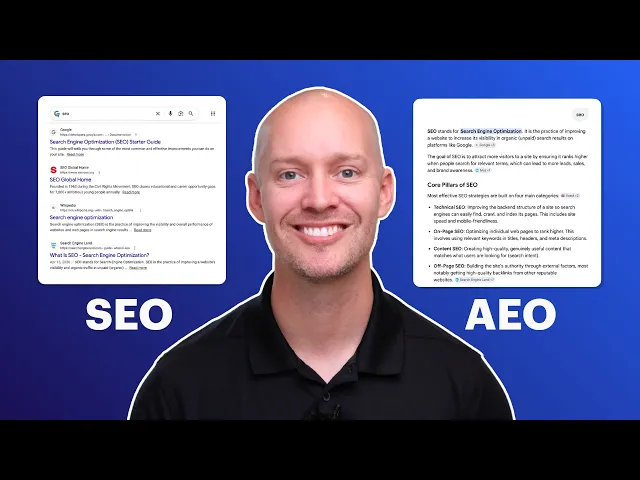
SEO vs AEO: a building block, not a replacement
AEO can feel like a brand-new discipline to learn from scratch, right as clicks from Google search keep dropping. It isn't. AEO is built on the SEO fundamentals already in place, here's how the two actually work together.
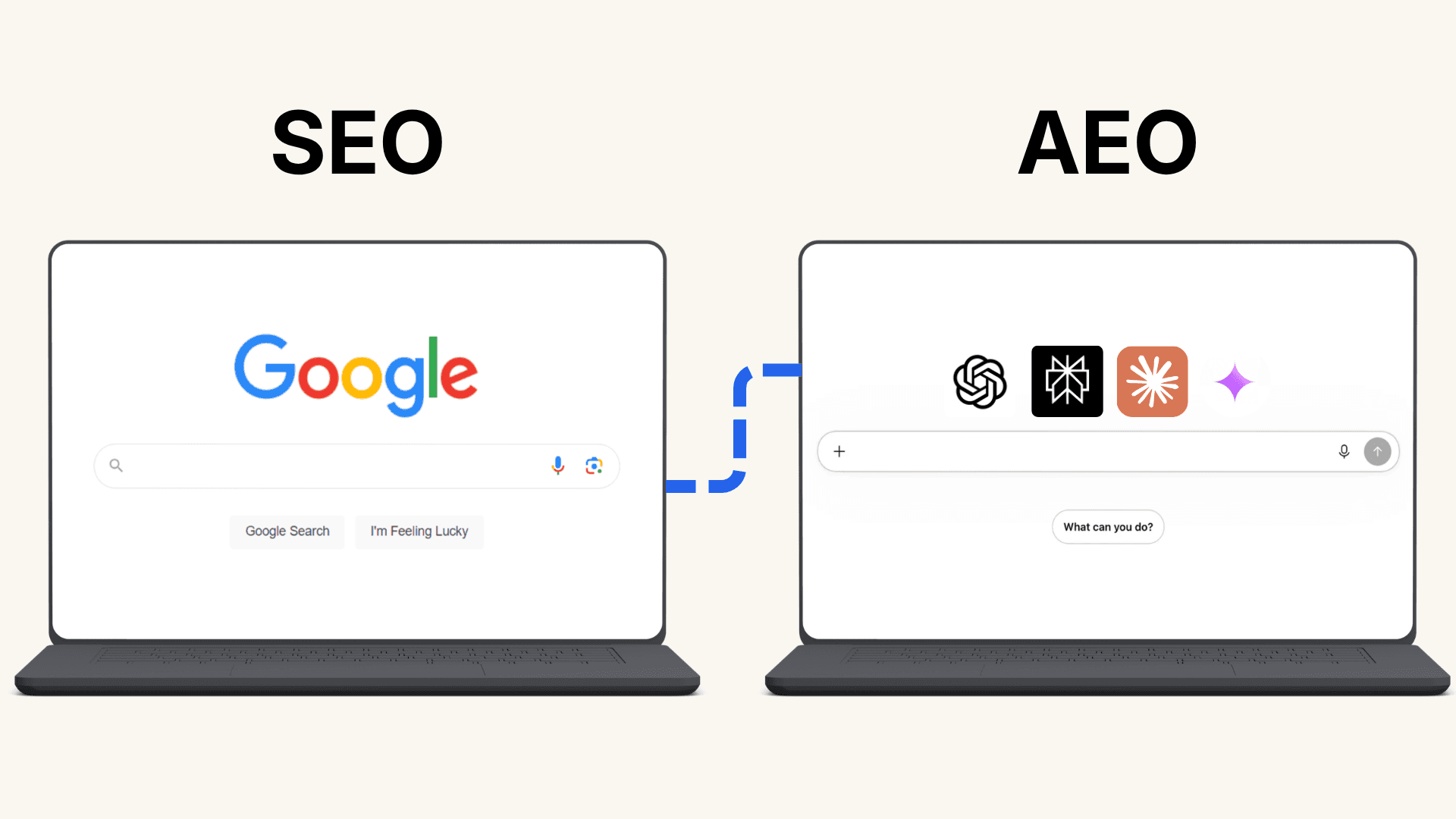
Many misunderstand Answer Engine Optimization (AEO) as the next Search Engine Optimization (SEO). AEO is built on SEO, not a replacement for it. SEO and AEO now serve two distinct purposes: SEO drives rankings and clicks, AEO drives citations and recommendations.
SEO and AEO: how they're different
SEO gets you found and ranked by a search engine, so a person clicks through to your site. Someone searches "best project management tool for remote teams," Google returns a ranked list of pages, and they click the one that looks most relevant. The website earns the visit.
AEO gets you found and cited by an AI engine, so a model answers with your brand in the response, no click required. Someone asks ChatGPT the same question, and the model names two or three tools directly in its answer, sourced from whatever content it found credible enough to cite. The brand gets the mention, whether or not anyone ever visits the site.
Both depend on content a search system can find and trust. SEO measures success in rankings and clicks. AEO measures it in citations and mentions, a different outcome, built from a different kind of visibility.
SEO's role in AEO is shrinking
AI engines still pull from the same indexed, crawlable web that SEO has always optimized for, but ranking well predicts a citation less reliably than it used to. Ahrefs tracked 863,000 keywords and 4 million AI Overview URLs from July 2025 to March 2026, and found the share of citations coming from top-10 ranked pages fell from 76.1% to 37.9% over that period (Search Engine Journal, Rankshift).
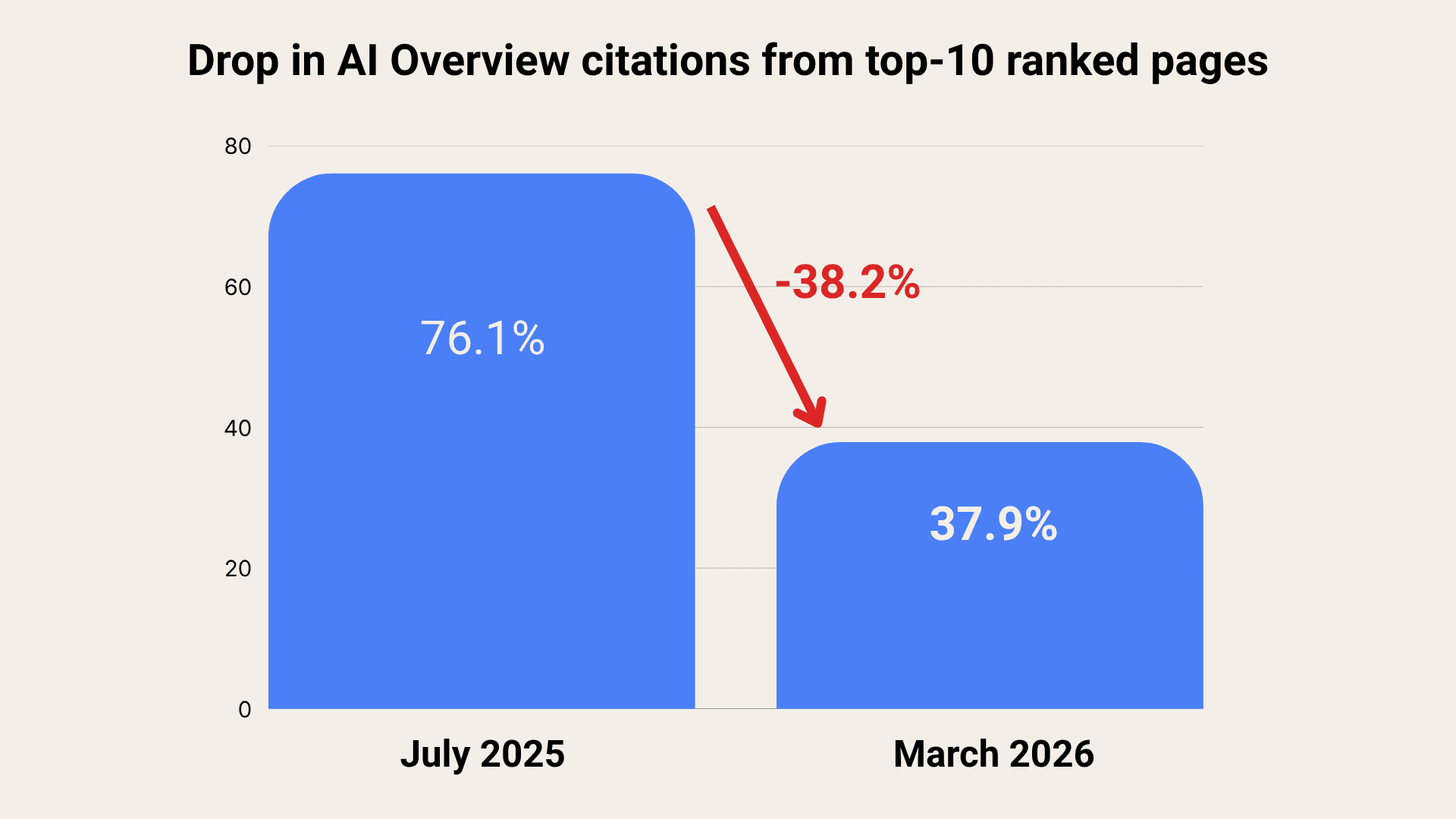
Technical health, crawlability, and authority still form the foundation every engine works from. But that foundation alone explains a shrinking share of what actually gets cited, and that shrinking overlap is exactly where AEO plays a big role.
How to feed SEO into AEO
SEO work gives you a starting point, but AEO has its own specific levers on top of it. Pages with schema markup get cited 2.3x more often, and pages with at least one named-source citation in the body get cited 2.1x more often (Rankshift). Positioning matters too, at the content level, not just the ranking level: 55% of AI Overview citations come from the top 30% of a page's actual content (CXL).
Structure content to answer the question directly in the first few sentences, not just to rank for a keyword. Add schema markup with real, visible facts behind it. Write the way a decision-maker actually asks a question: 94% of B2B buyers now use AI during their purchase process (Machine Relations Research).
The shift toward AEO
Between 58.5% and 68% of Google searches now end without getting clicked (DeepMarketing), and AI chatbots like ChatGPT and Perplexity drive 95-96% less referral traffic to publishers than traditional Google search (Arc Intermedia). SEO alone no longer accounts for how most people find and evaluate a brand.
How to know if your AEO is working
Extending SEO into AEO raises a practical question: whether it's working. A handful of tools now track this specifically, Otterly AI, Profound, and Peec AI among them, each monitoring brand visibility and citations across AI engines.
Subsig takes a different approach: combining AI visibility monitoring, review monitoring, and brand monitoring into one platform.
Modern AI systems evaluate reviews, brand mentions, and online conversations alongside citations when deciding what to recommend, so AI visibility on its own is only part of the picture. Subsig tracks all of it from one dashboard, instead of piecing it together across separate subscriptions.
Explore how Subsig can track your AI visibility performance and all its contributing factors here:
Related Articles
AI Visibility

on
SEO vs AEO: a building block, not a replacement
AEO can feel like a brand-new discipline to learn from scratch, right as clicks from Google search keep dropping. It isn't. AEO is built on the SEO fundamentals already in place, here's how the two actually work together.

AI Visibility
on
How online reviews improve AI visibility: why reviews matter
Online reviews give AI search tools more context about your brand by showing what real customers say about your products or services. Learn how reviews, reputation, and online mentions can support your AI visibility and help AI understand when your brand may be relevant.
AI Visibility
on
AI visibility: AI marketing that reaches decision makers
AI marketing isn't just content and ads anymore, it's how the buying committee actually finds you. Here's who's using ChatGPT, Perplexity, Claude, and Google AI Overview, and why missing even one of them can cost you the sale.

AI Visibility
on
August 2026 ranking dips explained: seasonal trends vs. AI visibility changes
Is your August ranking drop seasonal or AI related? Learn which SEO and AI visibility signals can help you find out.

AI Visibility
on
The AI visibility gap: Why engines recommend different brands
We ran the same prompt across ChatGPT, Claude, Perplexity, and Google AI Overview and got four different answers. Here’s what it means, and why the gap in AI visibility matters more than you'd expect.

AI Visibility
on
90-day AI visibility roadmap for better AI search results
A 90-day plan to help your brand get found, understood, and recommended by AI search tools like ChatGPT, Gemini, and Perplexity. Meta data