AI search in 2026: what's changed, and how businesses can adapt
Buyer research has moved onto AI platforms, and classic search clicks keep falling even as visibility grows. Most B2B brands remain invisible across the platforms their buyers now use. Here is what changed in 2026, and what adapting actually requires.
By
Subsig Team

AI search has moved from an emerging trend to the primary research channel for a majority of buyers. This shift affects how brands are discovered, compared, and recommended, independent of how well a brand ranks in traditional search. The data below outlines what has changed in 2026, why most brands remain unprepared for it, and what adapting to this shift actually requires.
How buyer search behavior is shifting in 2026
General AI search demand has grown roughly 3.6x since 2022, accelerating at 85% year over year (Rankability, a 48 month keyword panel study, 2026). Over the same period, interest in SEO itself peaked in mid-2025 and has since contracted about 30% (Rankability, 2026).
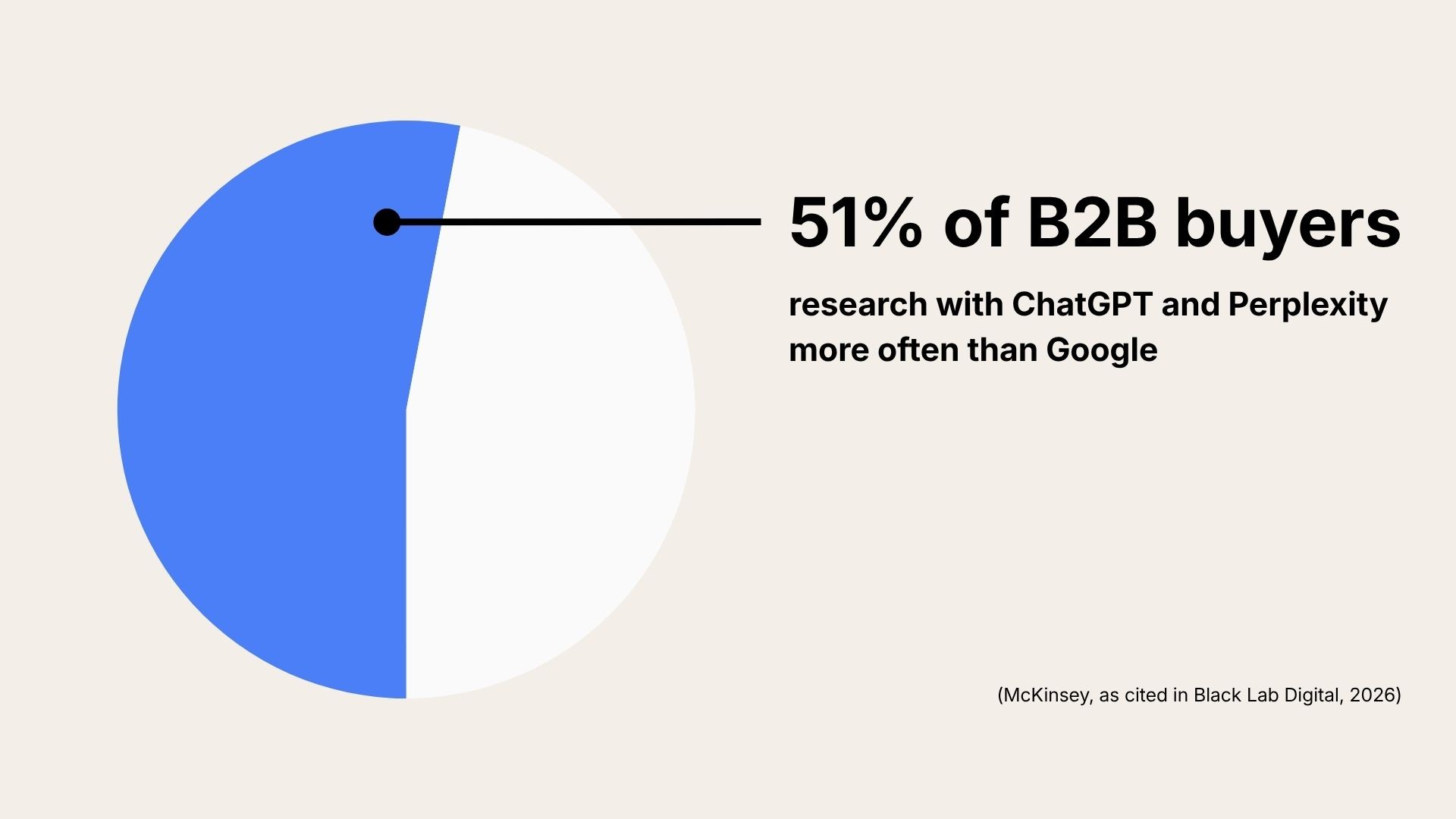
This shift is visible directly in buyer behavior. 51% of B2B buyers now start research with AI tools such as ChatGPT and Perplexity more often than Google (Black Lab Digital, 2026), and roughly 50% of consumers across all demographics are now actively using AI powered search to guide purchase decisions (McKinsey, cited in Black Lab Digital, 2026). ChatGPT alone reached 900 million weekly active users in February 2026, double where it was a year earlier (Black Lab Digital, 2026).
Pew Research Center's study of 68,879 actual Google searches found users clicked a traditional organic result only 8% of the time when an AI Overview was present, compared to 15% without one, a 46.7% relative decline (Pew Research Center, cited in Omnibound, 2026).
What zero click search means for classic search behavior
The zero click rate has climbed from 50% in 2019 to 64.82% in 2026, an acceleration that predates AI Overviews but has sharpened considerably since their rollout (Digital Applied, 2026). By Q4 2025, cumulative organic search click volume had fallen 42% from the pre-AI Overview baseline, after an initial 16% drop immediately following launch that never recovered, with declines accelerating further as Google expanded AI Overviews in May 2025 (Search Engine Land, 2026).
The effect compounds at the individual ranking level. Ahrefs measured a 58% click through rate drop for the number one ranked position when an AI Overview appears above it, based on an analysis of 300,000 keywords, meaning the top organic spot now earns roughly half the traffic it did before AI Overviews launched (Ahrefs, cited in Bright Labs, 2026).
The brand is not simply losing visibility, it is gaining it while converting less of it into a visit. BrightEdge's 12 month analysis found total search impressions increased 49% since AI Overviews launched, while click throughs declined roughly 30% over the same period (BrightEdge, cited in Omnibound, 2026).
Why most B2B brands are invisible in AI search
Semrush's 2026 AI Visibility Index analyzed 126 million AI search prompts collected between January and April 2026, tracking how ChatGPT, Google Gemini, Google AI Mode, and Google AI Overviews describe and cite more than 1,200 brands across 22 industry verticals. Of those 1,200-plus brands, only 36 appeared in the top 100 most-mentioned list on every platform, in every month of the study window, and all 36 were household names (Forbes, 2026). Every other brand had a gap somewhere.
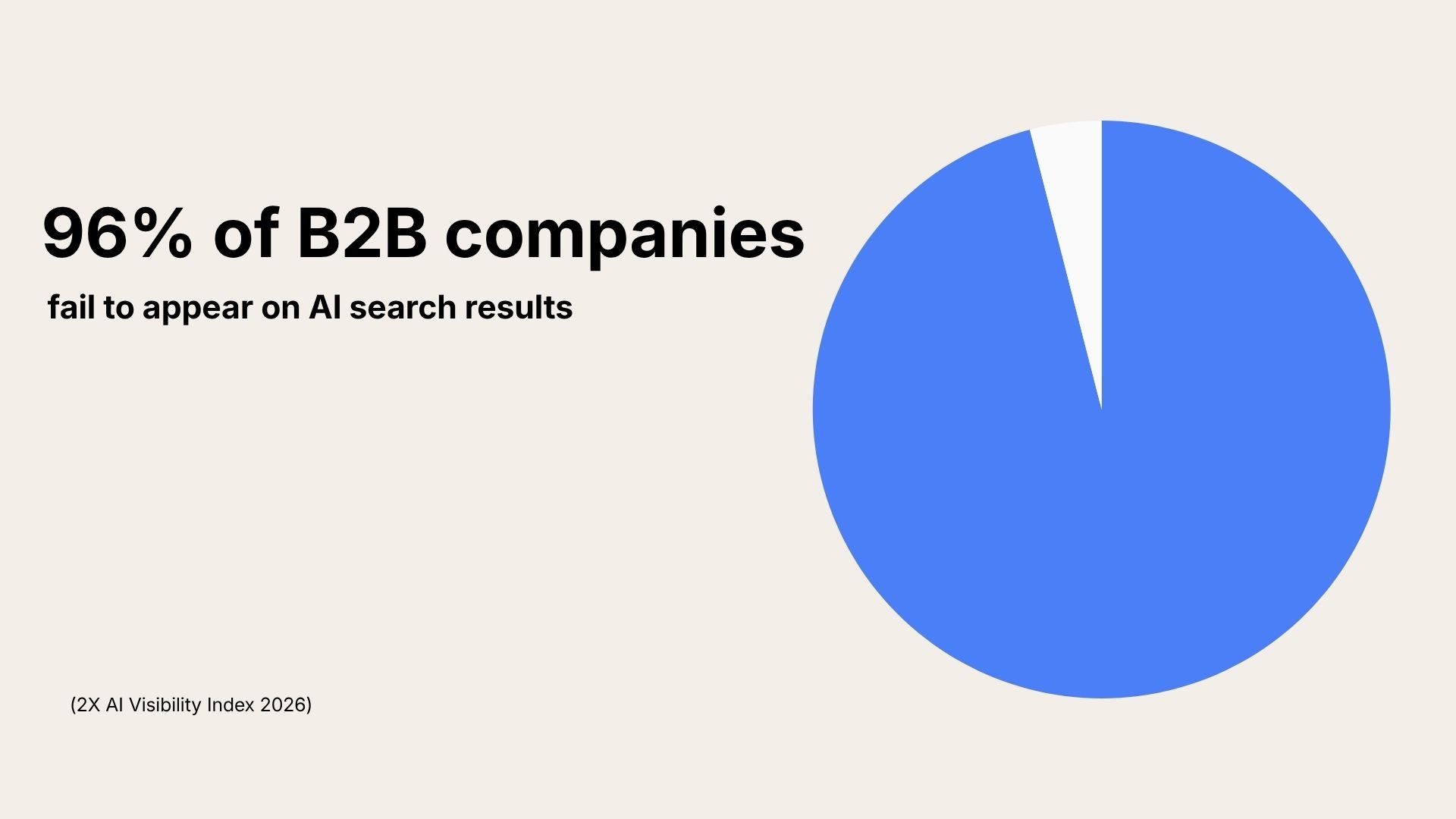
The gap is worse for B2B specifically. 96% of B2B companies fail to appear during the earliest stages of AI-driven buyer discovery (2X AI Visibility Index 2026, 2026).
Even the brands that do appear cannot assume they will stay visible. Only 30% of brands that appear in an AI-generated answer show up again in the very next response to the same query, and just 20% persist across five identical queries in a row (AirOps and Kevin Indig, 2026). A brand's standing on one AI platform also predicts remarkably little about its standing on another, since each platform draws from a different mix of sources, ChatGPT cites roughly 15 sources per response, Gemini uses just three (Forbes, 2026).
What this means for adapting
Buyer research has moved onto AI platforms, classic search clicks continue to decline even as visibility grows, and most brands, especially in B2B, remain invisible or inconsistently visible across the platforms their buyers now use.
Adapting means tracking presence on these platforms directly, since visibility on one no longer predicts visibility on another, and revisiting that tracking regularly, since even a citation earned today is not guaranteed tomorrow.
Doing this manually means running the same checks across ChatGPT, Perplexity, Google AI Overview, and Microsoft Copilot on a repeating schedule, tracking mentions, sentiment, and citation sources for each. A number of platforms have emerged to support this, Semrush, Profound, and Ahrefs among them, each covering some part of AI visibility tracking.
Ready to get ahead of the gap?
Related Articles
AI Visibility

on
AI search in 2026: what's changed, and how businesses can adapt
Buyer research has moved onto AI platforms, and classic search clicks keep falling even as visibility grows. Most B2B brands remain invisible across the platforms their buyers now use. Here is what changed in 2026, and what adapting actually requires.

Brand Mention
on
How to choose the right prompts to track your AI visibility
Choosing the right prompts is the first step to tracking AI visibility effectively. Here are the five categories to cover, examples for each, and what a breakdown of visibility, sentiment, ranking, and sources actually reveals.
AI Visibility
on
SEO vs AEO: a building block, not a replacement
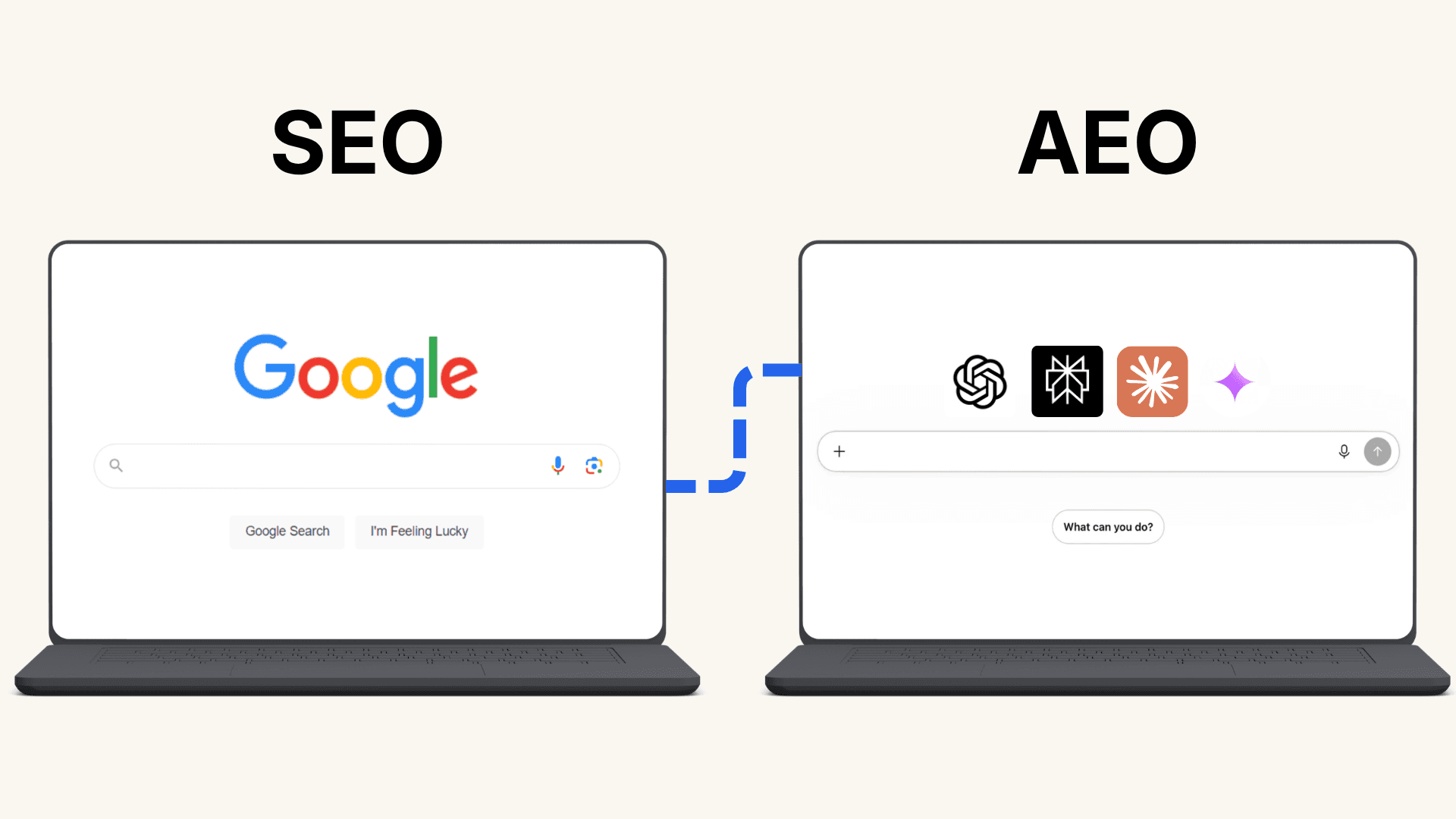
AEO can feel like a brand-new discipline to learn from scratch, right as clicks from Google search keep dropping. It isn't. AEO is built on the SEO fundamentals already in place, here's how the two actually work together.

AI Visibility
on
How online reviews improve AI visibility: why reviews matter
Online reviews give AI search tools more context about your brand by showing what real customers say about your products or services. Learn how reviews, reputation, and online mentions can support your AI visibility and help AI understand when your brand may be relevant.
AI Visibility
on
AI visibility: AI marketing that reaches decision makers
AI marketing isn't just content and ads anymore, it's how the buying committee actually finds you. Here's who's using ChatGPT, Perplexity, Claude, and Google AI Overview, and why missing even one of them can cost you the sale.

AI Visibility
on
August 2026 ranking dips explained: seasonal trends vs. AI visibility changes
Is your August ranking drop seasonal or AI related? Learn which SEO and AI visibility signals can help you find out.