How AI Visibility, Generative Engine Optimization, and Answer Engine Optimization Shape the Future of Search
AI-powered search is changing how brands are found, making visibility across generative and answer engines more important than ever.
By
Subsig Team

Search behavior is changing faster than at any point in the history of the internet. Traditional search engines remain important, but users are increasingly turning to AI-powered platforms to discover information, compare products, research solutions, and make decisions.
Instead of browsing multiple search results, users now ask questions directly to platforms like ChatGPT, Gemini, Claude, Perplexity, and Microsoft Copilot. These systems generate answers by analyzing information from across the web and presenting recommendations in conversational formats.
As a result, businesses can no longer focus exclusively on traditional SEO. Success increasingly depends on AI Visibility, Generative Engine Optimization (GEO), and Answer Engine Optimization (AEO).
Together, these disciplines help organizations improve discoverability across AI-powered search experiences, increase brand mentions in generated responses, and strengthen their presence wherever audiences seek answers.
Platforms like Subsig, Semrush, Ahrefs, Profound, Scrunch AI, and Google Search Console help businesses monitor visibility across both traditional search engines and emerging AI platforms.
Why search is evolving beyond traditional SEO
For years, SEO focused on improving rankings within search engine results pages. Businesses optimized content to rank for keywords and generate organic traffic.
Today, AI-generated answers are changing how users interact with information.
A typical customer journey may involve:
Asking ChatGPT for recommendations
Comparing options through Perplexity
Researching products on Google
Watching YouTube reviews
Reading Reddit discussions
Visiting a company website
Instead of clicking multiple search results, users increasingly receive direct answers.
This shift raises new questions for marketers and businesses:
Is our brand appearing in AI-generated responses?
How often are competitors mentioned instead?
Which sources influence AI recommendations?
How can we improve AI discoverability?
What content formats perform best in AI search?
AI Visibility, GEO, and AEO help answer these questions.
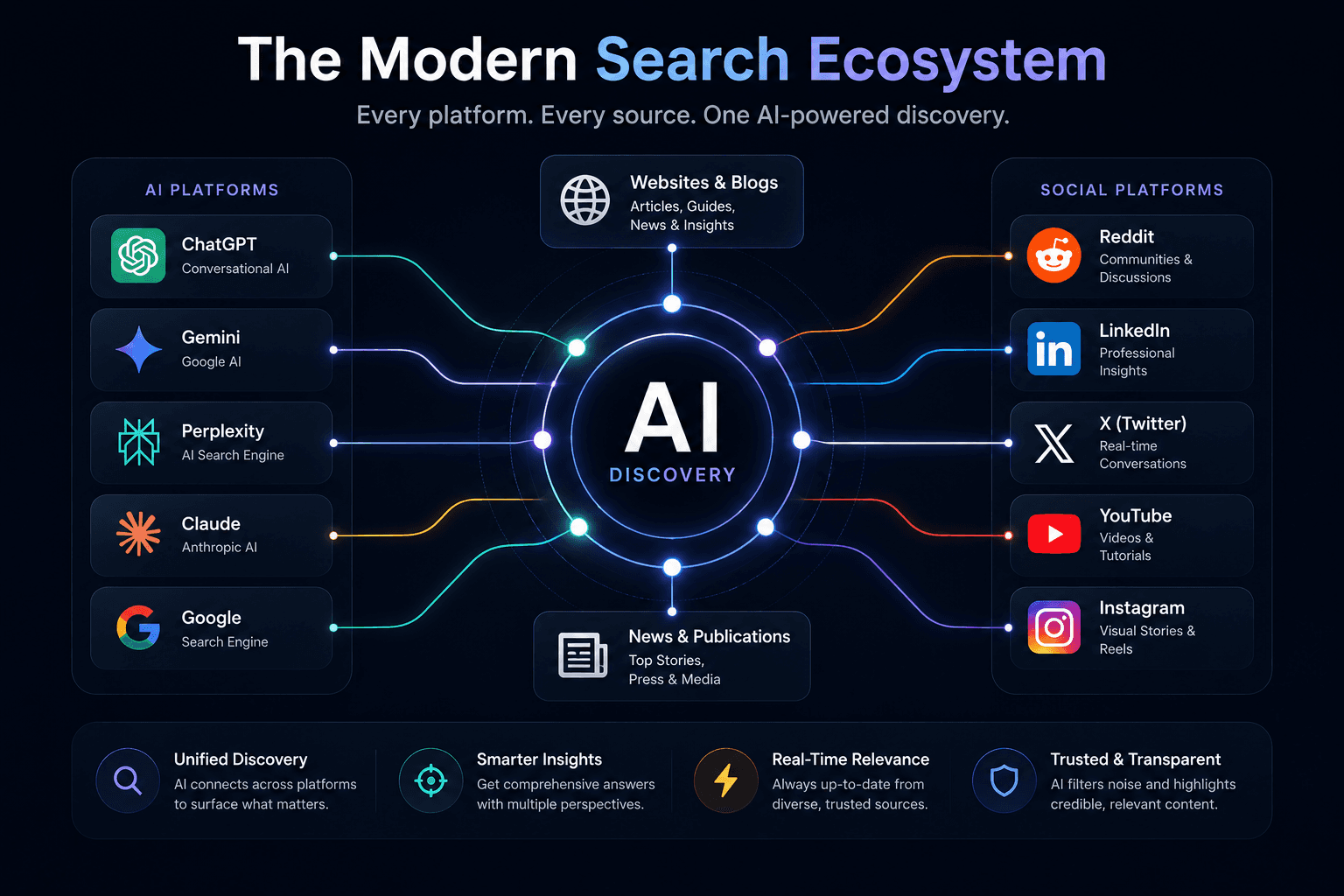
Modern search ecosystem showing Google, ChatGPT, Gemini, Perplexity, Claude, social platforms, and websites connected through AI discovery.
Understanding AI visibility
AI Visibility measures how often a brand, product, organization, or website appears within AI-generated responses.
Unlike traditional SEO, which focuses on rankings, AI Visibility focuses on presence within conversational search experiences.
Organizations increasingly track:
AI brand mentions
AI-generated citations
Entity recognition
Recommendation frequency
Competitive share of voice
Knowledge graph presence
For example, when users ask AI platforms for the best analytics software, marketing tools, or creator platforms, businesses want their brands included in the responses.
Strong AI visibility often depends on:
Trusted content
Brand authority
Entity recognition
Structured information
High-quality citations
Consistent digital presence
Key AI visibility metrics
Metric | What it measures | Business value |
AI mentions | Brand appearances in AI responses | Measures discoverability |
AI citations | Referenced sources | Indicates authority |
Share of AI voice | Visibility versus competitors | Tracks market presence |
Entity recognition | Brand understanding | Improves recommendations |
Knowledge graph coverage | Entity validation | Supports AI inclusion |
Platforms like Subsig, Profound, and Scrunch AI are helping organizations measure visibility across AI-powered search environments.
What Is AI Visibility? The 3 Types Every Marketer Needs to Know
https://www.youtube.com/watch?v=SIXVq28jTc4
What is Generative Engine Optimization?
Generative Engine Optimization (GEO) focuses on improving how content is discovered, interpreted, and referenced by AI-powered search systems.
While SEO traditionally targets search engines, GEO targets generative AI platforms that synthesize information into direct answers.
The goal is to increase the likelihood that AI systems:
Discover your content
Understand your expertise
Reference your brand
Recommend your products
Cite your resources
GEO strategies often include:
Creating authoritative content
Strengthening entity signals
Building topical authority
Improving content structure
Enhancing citation opportunities
Expanding digital presence
Organizations that invest in GEO are better positioned to influence AI-generated recommendations.
GEO optimization factors
Factor | Purpose | Impact |
Topical authority | Demonstrates expertise | Improves AI trust |
Entity SEO | Strengthens brand recognition | Enhances discoverability |
Content quality | Supports accurate understanding | Increases citations |
Structured information | Improves machine readability | Strengthens indexing |
Brand mentions | Builds authority signals | Expands visibility |
Platforms such as Semrush, Ahrefs, and Subsig help businesses identify content opportunities that improve discoverability within AI ecosystems.
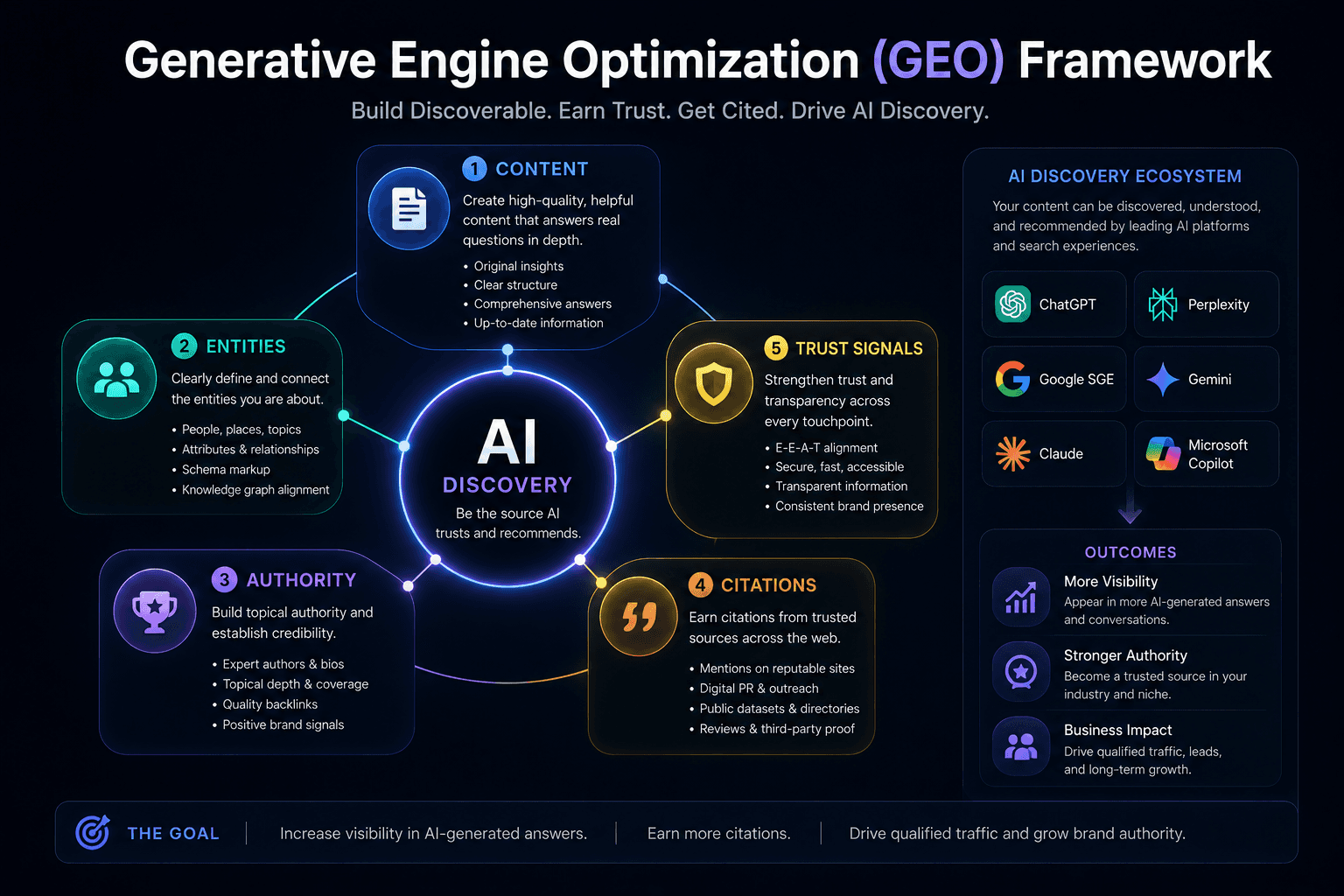
Generative Engine Optimization framework showing content, entities, authority, citations, and AI discovery.
Why Answer Engine Optimization matters
Answer Engine Optimization focuses on helping content become the best answer to user questions.
Instead of optimizing for keywords alone, AEO focuses on creating content that directly addresses user intent.
Answer engines include:
ChatGPT
Perplexity
Gemini
Claude
Google AI Overviews
Voice assistants
These platforms prioritize content that is:
Accurate
Clear
Structured
Authoritative
Easy to understand
Organizations often improve AEO performance through:
FAQ content
Direct answers
Structured data
Question-based content
Comprehensive topic coverage
Expert-driven resources
Key AEO benefits
Benefit | Business impact |
Better answer inclusion | Increases discoverability |
Higher authority signals | Improves trust |
Enhanced user experience | Supports engagement |
Greater AI visibility | Expands audience reach |
Improved content relevance | Supports long-term growth |
Businesses increasingly use Google Search Console, Semrush, and Subsig to identify content opportunities that align with answer engine behavior.
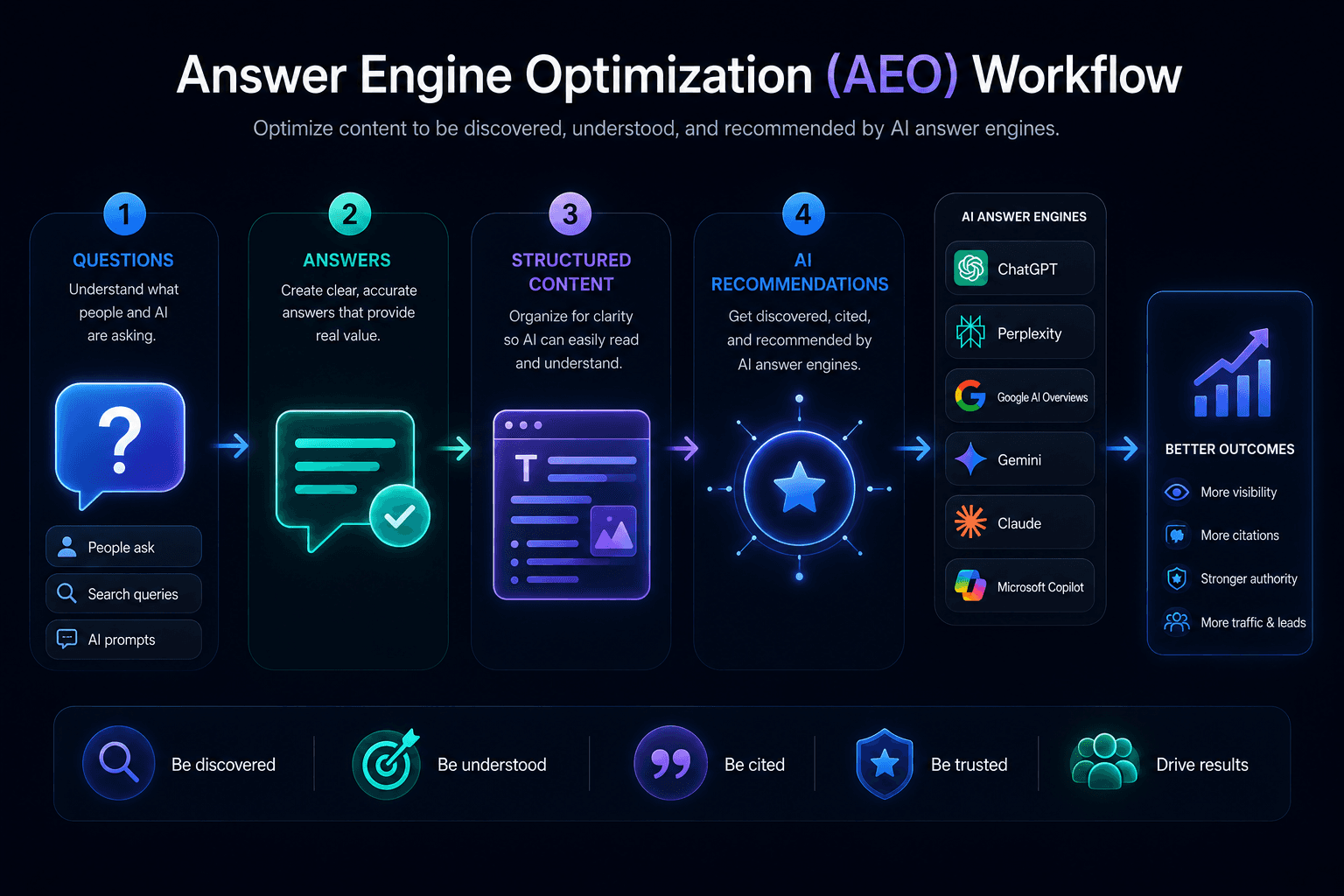
Answer engine optimization workflow showing questions, answers, structured content, and AI recommendations.
Comparing AI Visibility, GEO, and AEO
Although closely connected, each discipline serves a unique purpose.
Category | Primary focus | Key outcome |
AI Visibility | Presence within AI responses | Brand discoverability |
GEO | Optimization for generative systems | Increased AI citations |
AEO | Becoming the best answer | Higher recommendation rates |
Organizations achieve the strongest results when all three strategies work together.
For example:
AI Visibility measures whether brands appear.
GEO improves the likelihood of being referenced.
AEO increases the chances of becoming the preferred answer.
Together, these approaches strengthen visibility across modern search experiences.
Real-world applications
SaaS companies
Software providers use GEO and AEO strategies to improve visibility when users ask AI platforms for software recommendations.
Ecommerce brands
Retailers optimize product content and entity signals to increase inclusion in AI-generated buying guides and recommendations.
Publishers
Media organizations focus on answer-focused content and authority-building strategies to improve AI citations.
B2B organizations
Professional service firms create expert content that helps establish authority and improve discoverability across AI search platforms.
Recommended image embed
Customer discovery journey showing AI assistants, search engines, content platforms, and websites.
The future of AI-powered discovery
AI-generated search experiences will continue reshaping how information is discovered and consumed.
Future optimization strategies will increasingly combine:
Search Engine Optimization (SEO)
Generative Engine Optimization (GEO)
Answer Engine Optimization (AEO)
Entity SEO
Knowledge Graph Optimization
AI Visibility Tracking
Organizations that invest early in these capabilities will be better positioned to remain discoverable as search behavior continues evolving.
Platforms like Subsig, Profound, Scrunch AI, Semrush, and Ahrefs are helping businesses navigate this new era of AI-powered discovery.
The Future of Search: thriving in the era of AI-powered discovery
https://www.youtube.com/watch?v=ArPVSd1Qah8
Conclusion
AI Visibility, Generative Engine Optimization, and Answer Engine Optimization help businesses improve discoverability, strengthen authority, and remain visible across the AI-powered search experiences shaping the future of digital discovery.
Reference links
Related Articles

AI Visibility

on
AI search in 2026: what's changed, and how businesses can adapt
Buyer research has moved onto AI platforms, and classic search clicks keep falling even as visibility grows. Most B2B brands remain invisible across the platforms their buyers now use. Here is what changed in 2026, and what adapting actually requires.

Brand Mention
on
How to choose the right prompts to track your AI visibility
Choosing the right prompts is the first step to tracking AI visibility effectively. Here are the five categories to cover, examples for each, and what a breakdown of visibility, sentiment, ranking, and sources actually reveals.
AI Visibility
on
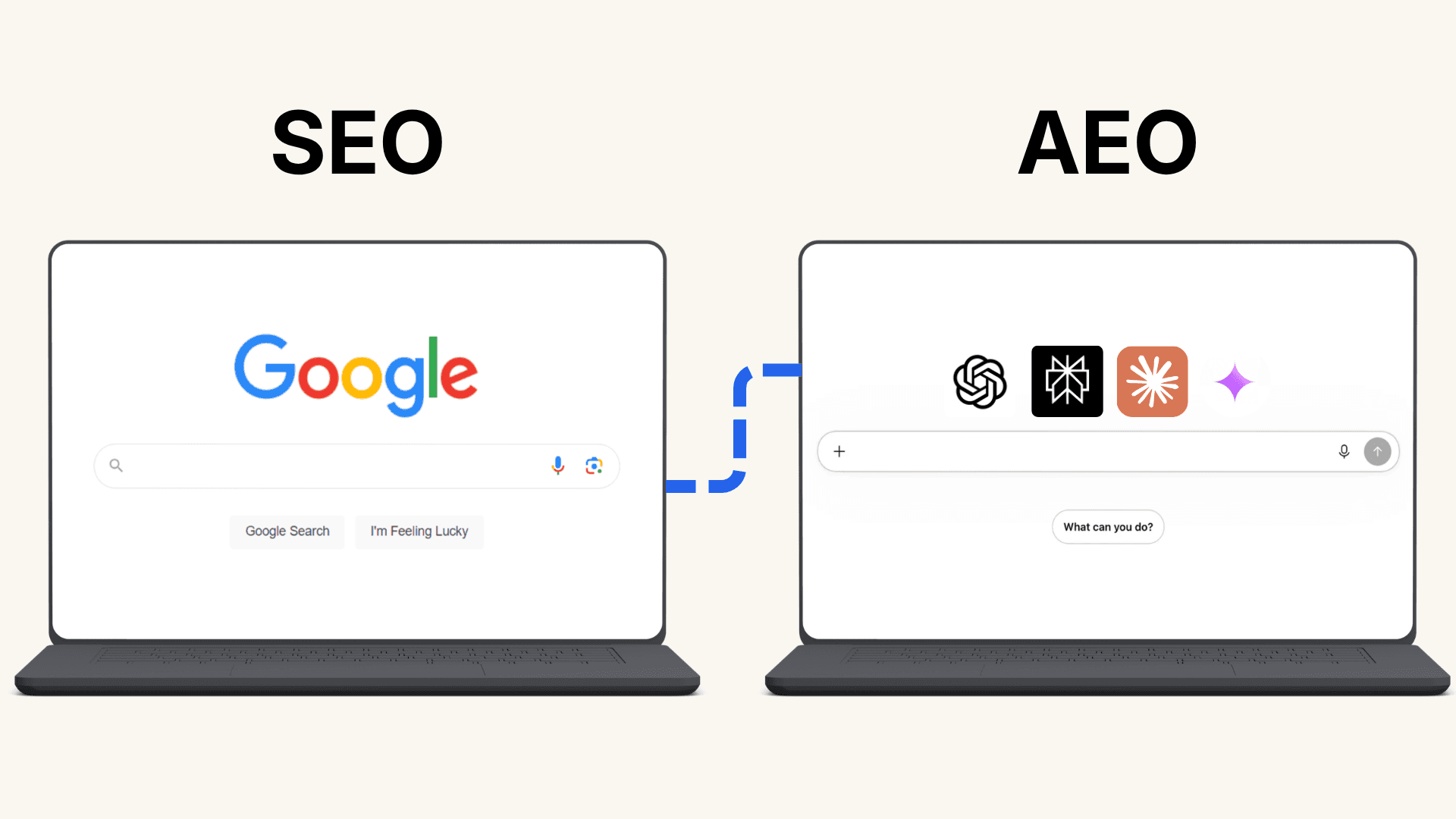
SEO vs AEO: a building block, not a replacement
AEO can feel like a brand-new discipline to learn from scratch, right as clicks from Google search keep dropping. It isn't. AEO is built on the SEO fundamentals already in place, here's how the two actually work together.

AI Visibility
on
How online reviews improve AI visibility: why reviews matter
Online reviews give AI search tools more context about your brand by showing what real customers say about your products or services. Learn how reviews, reputation, and online mentions can support your AI visibility and help AI understand when your brand may be relevant.
AI Visibility
on
AI visibility: AI marketing that reaches decision makers
AI marketing isn't just content and ads anymore, it's how the buying committee actually finds you. Here's who's using ChatGPT, Perplexity, Claude, and Google AI Overview, and why missing even one of them can cost you the sale.

AI Visibility
on
August 2026 ranking dips explained: seasonal trends vs. AI visibility changes
Is your August ranking drop seasonal or AI related? Learn which SEO and AI visibility signals can help you find out.