
How Audience Intelligence, Revenue Intelligence, and Growth Intelligence Drive Smarter Business Growth
The strongest growth strategies come from understanding who your audience is, what drives revenue, and where future opportunities exist.
By

Subsig Team

Businesses today have access to more customer and performance data than ever before. Every interaction, purchase, subscription, engagement, and conversion creates valuable information that can help organizations make better decisions.
However, collecting data alone is not enough. The organizations that grow fastest are those that transform information into actionable intelligence. This is where Audience Intelligence, Revenue Intelligence, and Growth Intelligence have become essential.
Together, these disciplines help businesses understand customer behavior, identify revenue opportunities, and uncover the factors driving sustainable growth. Rather than relying on assumptions, organizations can use intelligence-driven insights to improve decision-making, optimize investments, and strengthen long-term performance.
Platforms like Subsig, HubSpot, Salesforce, Google Analytics, Mixpanel, and Amplitude help organizations transform raw data into meaningful business intelligence.
Why intelligence matters in modern business
Customer journeys are becoming increasingly complex.
A potential customer may discover a brand through search, engage with content on social media, subscribe to a newsletter, attend a webinar, and eventually become a paying customer weeks or months later.
Without proper intelligence systems, businesses often struggle to understand:
Which audiences are most valuable
What drives revenue growth
Which channels generate the highest ROI
Why customers convert or churn
Where future growth opportunities exist
How audience behavior changes over time
Intelligence frameworks help organizations answer these questions and build more effective strategies.
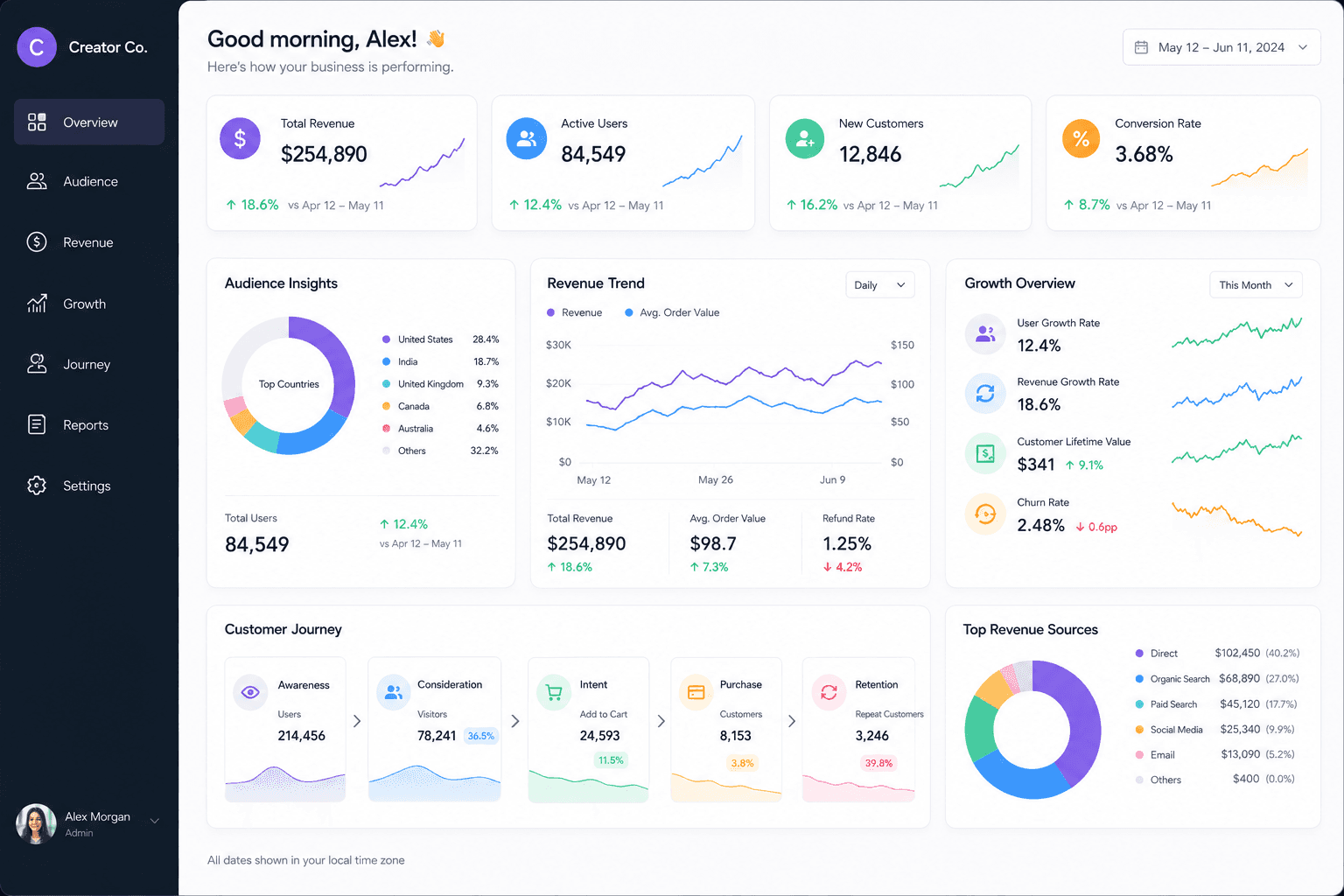
Business intelligence dashboard displaying audience insights, revenue trends, growth metrics, and customer journey analytics.
Understanding audience intelligence
Audience Intelligence focuses on understanding who customers are, how they behave, what they value, and how they interact with a brand.
Instead of looking only at demographics, audience intelligence analyzes behavioral patterns, engagement trends, interests, preferences, and customer journeys.
Organizations use audience intelligence to better understand:
Audience segments
Engagement behavior
Content preferences
Purchase intent
Customer journeys
Retention patterns
For example, a SaaS company may discover that customers who engage with educational content have significantly higher retention rates than customers acquired through promotional campaigns.
These insights help businesses create more personalized experiences and improve customer relationships.
Key audience intelligence metrics
Metric | What it measures | Business value |
Audience engagement | Interaction levels | Measures interest and activity |
Retention rate | Returning users | Indicates loyalty |
Audience segmentation | Customer group characteristics | Improves personalization |
Content consumption | Content preferences | Optimizes content strategy |
Customer journey progression | Movement through lifecycle stages | Supports conversion optimization |
Platforms such as Google Analytics, Mixpanel, and Subsig help organizations gain deeper visibility into audience behavior and engagement patterns.
How To View Audiences In Google Analytics (Full Guide)
https://www.youtube.com/watch?v=qjvSfLkVFXw
How revenue intelligence improves financial performance
Revenue Intelligence focuses on understanding the activities, channels, products, and customer segments that generate business income.
Rather than simply measuring revenue totals, revenue intelligence helps organizations understand why revenue grows, declines, or shifts over time.
Revenue intelligence often analyzes:
Revenue sources
Customer profitability
Sales performance
Subscription revenue
Revenue attribution
Customer lifetime value
For example, an ecommerce business may discover that repeat customers acquired through email marketing generate significantly higher lifetime value than customers acquired through paid advertising.
These insights help organizations allocate resources more effectively.
Key revenue intelligence metrics
Metric | What it measures | Business value |
Revenue growth rate | Changes in revenue over time | Tracks business momentum |
Customer lifetime value | Long-term customer value | Supports acquisition decisions |
Average revenue per customer | Revenue generated per customer | Measures profitability |
Revenue attribution | Source of revenue generation | Improves marketing ROI |
Recurring revenue | Predictable income streams | Supports forecasting |
Organizations increasingly use Salesforce, HubSpot, and Subsig to connect revenue data with customer behavior and business performance.
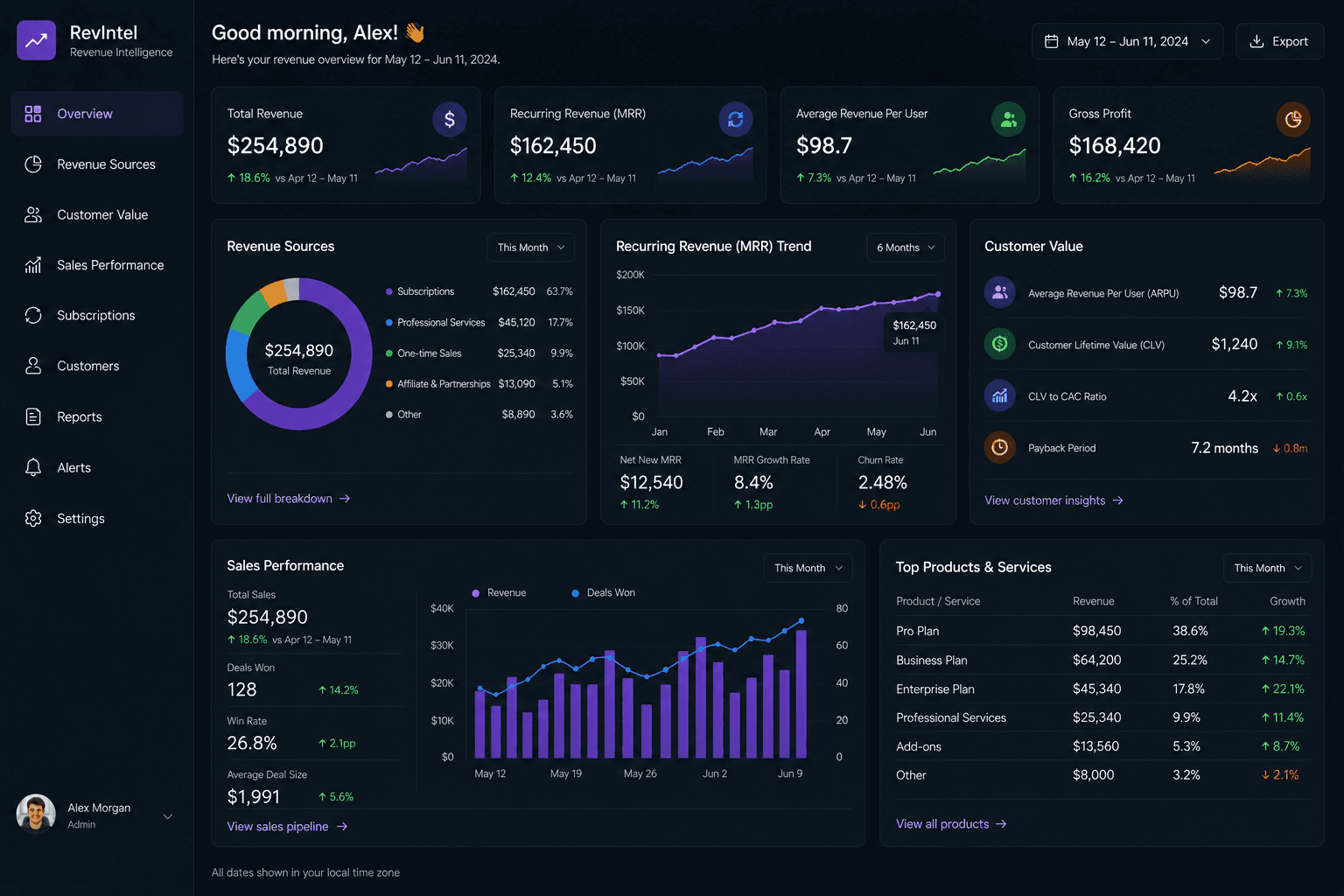
Revenue intelligence dashboard showing revenue sources, customer value, recurring revenue, and sales performance.
Understanding growth intelligence
Growth Intelligence focuses on identifying opportunities that can accelerate customer acquisition, retention, expansion, and business performance.
Unlike traditional reporting, growth intelligence helps organizations determine where future growth is most likely to occur.
Growth intelligence combines data from:
Customer behavior
Market trends
Revenue performance
Product usage
Competitive activity
Audience engagement
Organizations use growth intelligence to uncover:
High-value customer segments
Expansion opportunities
Product-market fit signals
Growth bottlenecks
Emerging market trends
For example, a software company may discover that a specific industry segment generates stronger retention and higher lifetime value than other customer groups.
This insight can influence future marketing, sales, and product strategies.
Key growth intelligence metrics
Metric | Purpose | Business impact |
Customer acquisition growth | Measures audience expansion | Supports scaling |
Retention trends | Measures customer loyalty | Improves sustainability |
Expansion revenue | Revenue from existing customers | Increases profitability |
Market opportunity indicators | Growth potential | Supports strategic planning |
Segment performance | Customer group effectiveness | Optimizes targeting |
Platforms like Amplitude, Mixpanel, and Subsig help organizations identify growth opportunities through advanced behavioral and performance analytics.
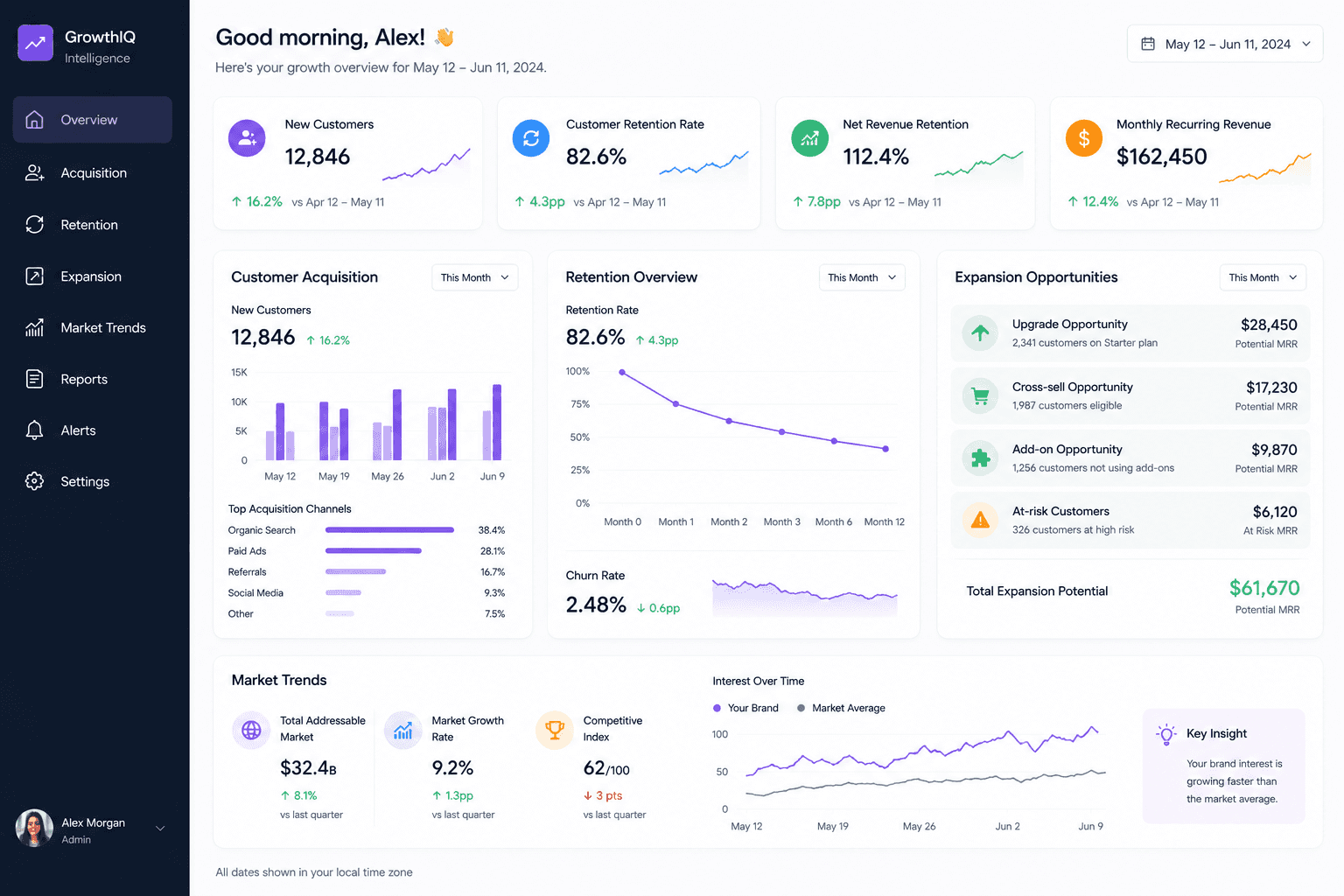
Growth intelligence dashboard showing customer acquisition, retention, expansion opportunities, and market trends.
Comparing audience intelligence, revenue intelligence, and growth intelligence
Although these disciplines are closely connected, each provides a different perspective on business performance.
Category | Primary focus | Key question answered |
Audience Intelligence | Customer behavior and engagement | Who are our customers and how do they behave? |
Revenue Intelligence | Revenue generation and profitability | What drives revenue performance? |
Growth Intelligence | Expansion opportunities | Where can we grow next? |
Organizations often generate the greatest value when all three intelligence systems work together.
For example:
Audience Intelligence explains customer behavior.
Revenue Intelligence measures financial impact.
Growth Intelligence identifies future opportunities.
Together, they provide a comprehensive view of business performance.
Real-world applications
SaaS companies
Software providers use audience intelligence to understand product adoption, revenue intelligence to optimize recurring revenue, and growth intelligence to identify expansion opportunities.
Ecommerce brands
Retailers analyze customer behavior, purchasing patterns, and market opportunities to improve profitability and customer retention.
Subscription businesses
Membership platforms use intelligence systems to understand subscriber engagement, recurring revenue performance, and future growth potential.
B2B organizations
Sales and marketing teams use audience, revenue, and growth intelligence to improve pipeline performance, customer acquisition, and account expansion.
Recommended image embed
Executive intelligence dashboard displaying customer insights, revenue trends, growth forecasts, and performance metrics.
The future of business intelligence
Artificial intelligence is transforming how organizations collect, analyze, and act on business data.
Future intelligence platforms will increasingly provide:
Predictive audience insights
AI-powered revenue forecasting
Automated opportunity discovery
Customer lifetime value predictions
Real-time growth recommendations
Cross-platform intelligence reporting
Organizations that embrace intelligence-driven decision-making will be better positioned to adapt to changing markets and identify new opportunities.
Platforms like Subsig, HubSpot, Salesforce, Amplitude, and Mixpanel are helping businesses move toward more proactive and data-driven growth strategies.

Understanding Business Intelligence, Data Analytics, and Business Analytics
https://www.youtube.com/watch?v=MkjlIzvfqdo
Conclusion
Audience Intelligence, Revenue Intelligence, and Growth Intelligence help organizations better understand customers, improve financial performance, and identify the opportunities that drive sustainable business growth.
Reference links
Related Articles

AI Visibility

on
AI search in 2026: what's changed, and how businesses can adapt
Buyer research has moved onto AI platforms, and classic search clicks keep falling even as visibility grows. Most B2B brands remain invisible across the platforms their buyers now use. Here is what changed in 2026, and what adapting actually requires.

Brand Mention
on
How to choose the right prompts to track your AI visibility
Choosing the right prompts is the first step to tracking AI visibility effectively. Here are the five categories to cover, examples for each, and what a breakdown of visibility, sentiment, ranking, and sources actually reveals.
AI Visibility
on
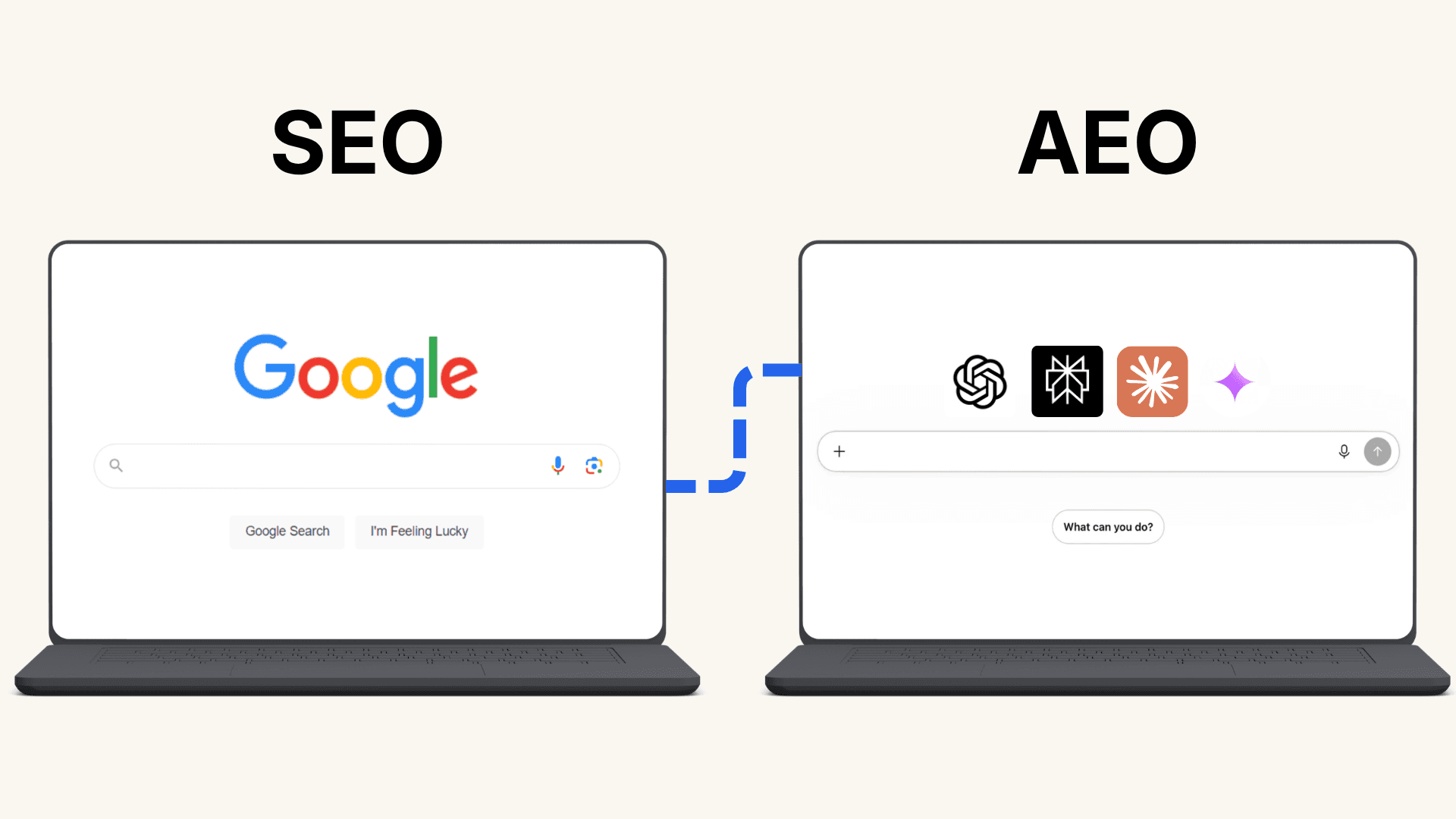
SEO vs AEO: a building block, not a replacement
AEO can feel like a brand-new discipline to learn from scratch, right as clicks from Google search keep dropping. It isn't. AEO is built on the SEO fundamentals already in place, here's how the two actually work together.

AI Visibility
on
How online reviews improve AI visibility: why reviews matter
Online reviews give AI search tools more context about your brand by showing what real customers say about your products or services. Learn how reviews, reputation, and online mentions can support your AI visibility and help AI understand when your brand may be relevant.

AI Visibility
on
AI visibility: AI marketing that reaches decision makers
AI marketing isn't just content and ads anymore, it's how the buying committee actually finds you. Here's who's using ChatGPT, Perplexity, Claude, and Google AI Overview, and why missing even one of them can cost you the sale.

AI Visibility
on
August 2026 ranking dips explained: seasonal trends vs. AI visibility changes
Is your August ranking drop seasonal or AI related? Learn which SEO and AI visibility signals can help you find out.