How Audience Growth Tracking and Conversion Insights Drive Growth
Today's audiences interact with brands across multiple channels before converting. Discover how audience analytics connect those interactions to reveal what drives growth, engagement, and retention.

Audience growth is no longer just about increasing follower counts. Successful creators and brands focus on understanding how audiences discover content, engage with communities, convert into customers, and remain active over time.
As competition increases across YouTube, TikTok, Instagram, Twitch, newsletters, Discord communities, and subscription platforms, audience intelligence has become a critical part of sustainable growth. This is where audience conversion tracking, audience growth tracking, and audience lifecycle tracking provide valuable insights.
Together, these analytics help creators identify which content drives conversions, which channels support long-term audience growth, and how audience relationships evolve throughout the customer journey.
Factors Powering Audience Growth Tracking and Conversion Insights
Audience growth and conversion no longer depend on a single campaign or marketing channel.
As customers interact with brands across search engines, social media, AI-powered platforms, websites, and other digital touchpoints, businesses need a clearer understanding of how audiences are acquired, engaged, and converted over time.
Audience growth tracking and conversion insights provide this visibility, helping organizations identify what drives meaningful engagement, optimize marketing strategies, and build sustainable growth based on real customer behavior rather than assumptions.
The key factors powering this visibility include:
Acquisition clarity: understanding where audiences originate and which channels deliver high-intent users
Engagement depth: measuring how audiences interact with content across formats and platforms
Conversion pathways: tracking the actions that turn viewers into subscribers, customers, or members
Retention signals: identifying what keeps audiences active and returning over time
Lifecycle mapping: analyzing how audience behavior changes from first touch to long-term loyalty
Cross-platform attribution: connecting fragmented data into a unified view of audience behavior
Platforms like Subsig, Google Analytics, Mixpanel, Amplitude, Sprout Social, and Hootsuite help creators and businesses understand audience behavior across multiple channels and touchpoints.
Why audience analytics matter more than ever
Today's audiences interact with content across multiple platforms before taking meaningful actions. A viewer may discover a creator on YouTube, subscribe to a newsletter, join a Discord community, and eventually purchase a membership, course, or digital product.
Without audience analytics, it becomes difficult to understand what influences these decisions and where opportunities for growth exist.
Modern audience tracking helps answer questions such as:
Which content generates the highest conversion rates?
What channels attract the most valuable audiences?
Why do subscribers disengage?
Which audience segments are most loyal?
How does audience behavior change over time?
What factors improve retention and monetization?
Rather than relying on assumptions, creators can make decisions based on measurable audience behavior and real performance data.
Understanding audience conversion tracking
Conversion tracking focuses on measuring the actions audiences take after interacting with content.
These actions often represent meaningful business outcomes such as:
Newsletter subscriptions
Membership signups
Product purchases
Affiliate link clicks
Event registrations
Course enrollments
Premium content upgrades
For example, a creator may discover that tutorial-based videos consistently generate more paid memberships than entertainment-focused content. Understanding these patterns helps improve content strategy, audience targeting, and revenue performance.
Key audience conversion metrics
Understanding audience growth is only part of the equation. Creators also need clear visibility into how that audience takes action. Conversion metrics connect engagement to real outcomes and help identify what actually drives results.
The table below outlines the most important audience conversion metrics along with what they measure and why they matter for improving performance and growth.
Metric | What it measures | Why it matters |
Conversion rate | Percentage of users completing actions | Measures campaign effectiveness |
Click-through rate | Audience interaction with links | Evaluates content performance |
Cost per conversion | Cost of acquiring customers | Improves efficiency |
Revenue per visitor | Earnings per audience member | Supports monetization |
Funnel completion rate | Progress through conversion stages | Identifies drop-off points |
Tools like Google Analytics, Mixpanel, and Subsig help creators understand which content, campaigns, and audience segments contribute most directly to business goals.
Google Analytics Conversion Tracking | Step by Step
How audience growth tracking supports sustainable expansion
Audience growth tracking focuses on understanding how communities expand and what factors contribute to long-term audience development.
While viral content may generate short-term spikes in followers, growth tracking helps determine whether audience expansion is sustainable and whether new audiences remain engaged over time.
Key growth indicators include
Subscriber growth trends
Follower acquisition sources
Returning visitors
Audience retention
Engagement consistency
Cross-platform audience movement
For example, creators often discover that educational content, collaborations, and community-focused initiatives generate stronger long-term growth than short-lived viral trends.
Refer to the table below for an overview of the key metrics used to track audience growth and measure conversion performance.
Metric | What it measures | Strategic value |
Subscriber growth rate | Speed of audience expansion | Identifies successful content strategies |
Audience retention | Returning audience percentage | Measures loyalty |
Traffic sources | Audience acquisition channels | Improves distribution strategy |
Engagement trends | Changes in activity levels | Supports content planning |
Cross-platform migration | Audience movement between channels | Strengthens ecosystem growth |
Platforms such as Sprout Social, Hootsuite, and Subsig help creators analyze audience growth across multiple platforms through centralized reporting and audience intelligence dashboards.
Why audience lifecycle tracking is becoming essential
Not every audience member behaves the same way.
Some users discover content and leave immediately. Others become subscribers, customers, advocates, and long-term community members.
Audience lifecycle tracking helps creators understand these different stages of engagement and optimize experiences throughout the audience journey.
Typical lifecycle stages include
Discovery
Engagement
Subscription
Conversion
Retention
Advocacy
By analyzing lifecycle behavior, creators gain insight into how audiences progress through their ecosystem.
For example, newsletter subscribers may eventually become premium members, while active community participants may become customers, ambassadors, or long-term supporters.
Lifecycle tracking helps identify where audiences disengage and where opportunities for improvement exist. Some of the key lifecycle tracking benefits are outlined in the table below.
Benefit | Impact |
Better retention analysis | Identifies audience drop-off points |
Stronger customer journeys | Improves audience experiences |
Enhanced monetization | Reveals high-value audience segments |
Improved engagement | Supports personalized communication |
Greater lifetime value | Strengthens long-term profitability |
Platforms such as Amplitude, Mixpanel, and HubSpot help organizations understand audience progression and behavioral patterns throughout the customer lifecycle.
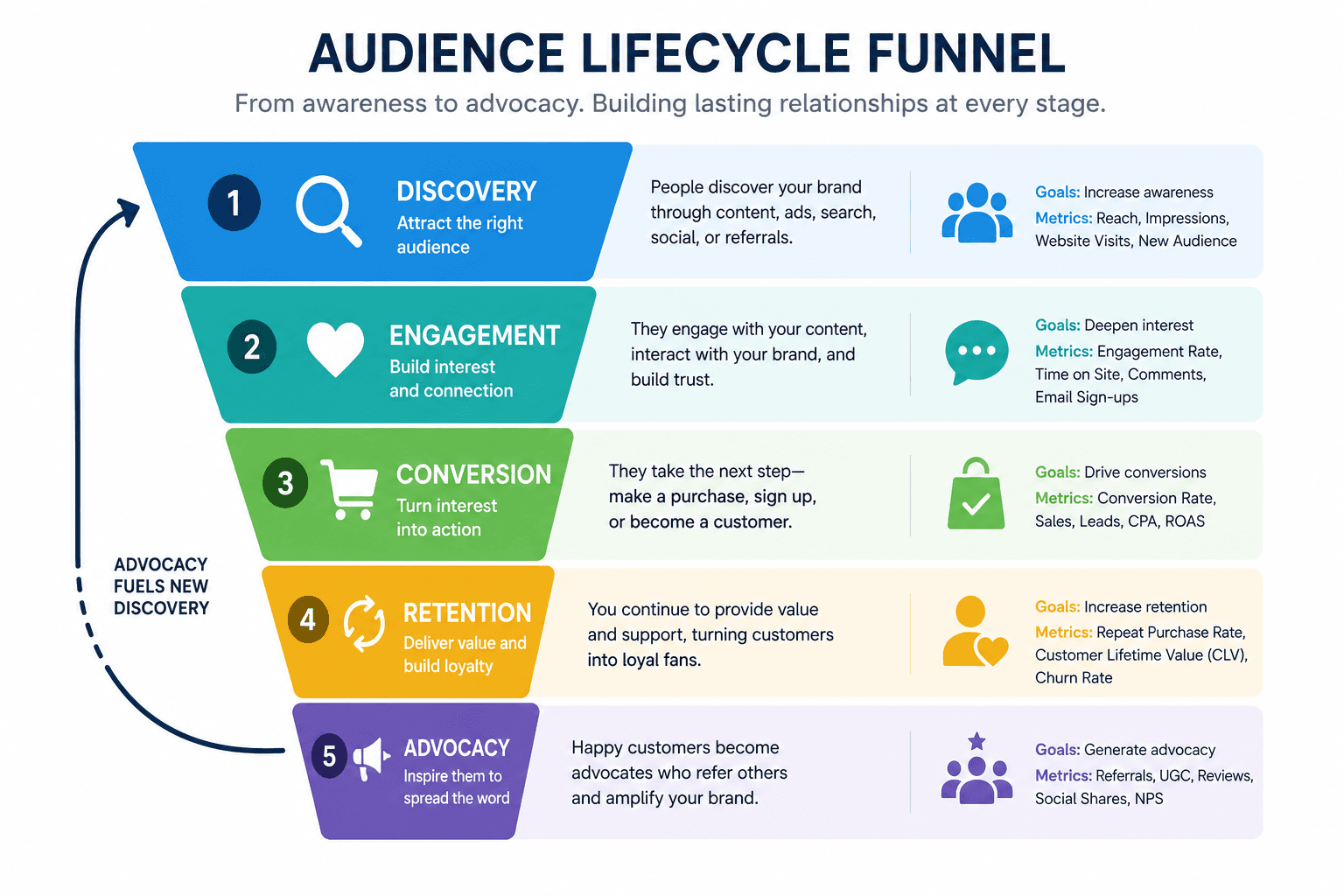
Audience lifecycle funnel showing discovery, engagement, conversion, retention, and advocacy stages.
Comparing audience analytics categories
Although closely related, these analytics categories serve different purposes.
Analytics category | Primary focus | Business impact |
Conversion tracking | Audience actions and purchases | Improves monetization |
Growth tracking | Audience expansion and retention | Supports sustainable growth |
Lifecycle tracking | Audience journey stages | Improves long-term engagement |
Engagement analytics | Content interaction quality | Optimizes content strategy |
Revenue analytics | Monetization performance | Strengthens profitability |
Organizations often achieve the best results when these analytics are viewed together rather than independently. Combining conversion, growth, and lifecycle insights provides a more complete understanding of audience behavior.
Real-world applications
Audience analytics becomes most valuable when applied to real growth scenarios. By translating data into action, creators can improve performance across monetization, engagement, and audience development.
The examples below highlight how creators use audience insights across different areas to drive measurable results and long-term growth.
Membership optimization
Creators offering paid communities can identify which content formats generate the highest conversion rates and retention levels, helping maximize recurring revenue.
Newsletter growth
Publishers use lifecycle analytics to understand why subscribers remain active, which campaigns increase engagement, and what factors contribute to unsubscribes.
Community development
Gaming creators frequently analyze how audiences move between YouTube, Discord, Twitch, newsletters, and premium communities to strengthen their audience ecosystem.
Sponsorship evaluation
Creators can measure how sponsored content influences audience engagement, conversion behavior, customer trust, and long-term retention.
Platforms such as the TikTok Creator Marketplace and Meta Creator Tools provide additional insights into creator performance and audience interactions.
The future of audience analytics
Audience analytics platforms are increasingly moving toward predictive intelligence and AI-powered reporting.
Emerging capabilities include:
Predictive conversion forecasting
Automated churn detection
Audience lifetime value analysis
Behavioral segmentation
Cross-platform attribution
Real-time engagement optimization
These capabilities help creators identify opportunities before problems occur and improve decision-making across content strategy, audience development, community management, and monetization.
Platforms like Subsig, Amplitude, and Mixpanel are helping creators adapt to this shift through advanced audience intelligence, predictive analytics, and lifecycle tracking.
Drive Growth With Smarter Audience Tracking
Audience conversion tracking, audience growth tracking, and audience lifecycle tracking give creators a complete view of how audiences discover, engage, convert, and stay over time. This visibility makes it possible to move beyond surface-level metrics and build strategies grounded in real behavior, not assumptions.
The creators who grow fastest are not just creating more content. They are understanding what works, why it works, and how to repeat it at scale, often using tools like Subsig. When you track the full audience journey and act on those insights consistently, growth becomes more predictable, more efficient, and far more sustainable.
Videos and additional resources
Subsig: https://subsig.ai/
Subsig Blog: https://subsig.ai/blog/
Google Analytics: https://analytics.google.com/
Mixpanel: https://mixpanel.com/
Amplitude: https://amplitude.com/
Sprout Social: https://sproutsocial.com/
Hootsuite: https://www.hootsuite.com/
HubSpot Audience Analytics Guide: https://blog.hubspot.com/marketing/audience-analysis
YouTube Creator Analytics: https://support.google.com/youtube/answer/9002587
TikTok Creator Marketplace: https://creatormarketplace.tiktok.com/
Meta Creator Tools: https://www.facebook.com/business/creators
Related Articles
AI Visibility

on
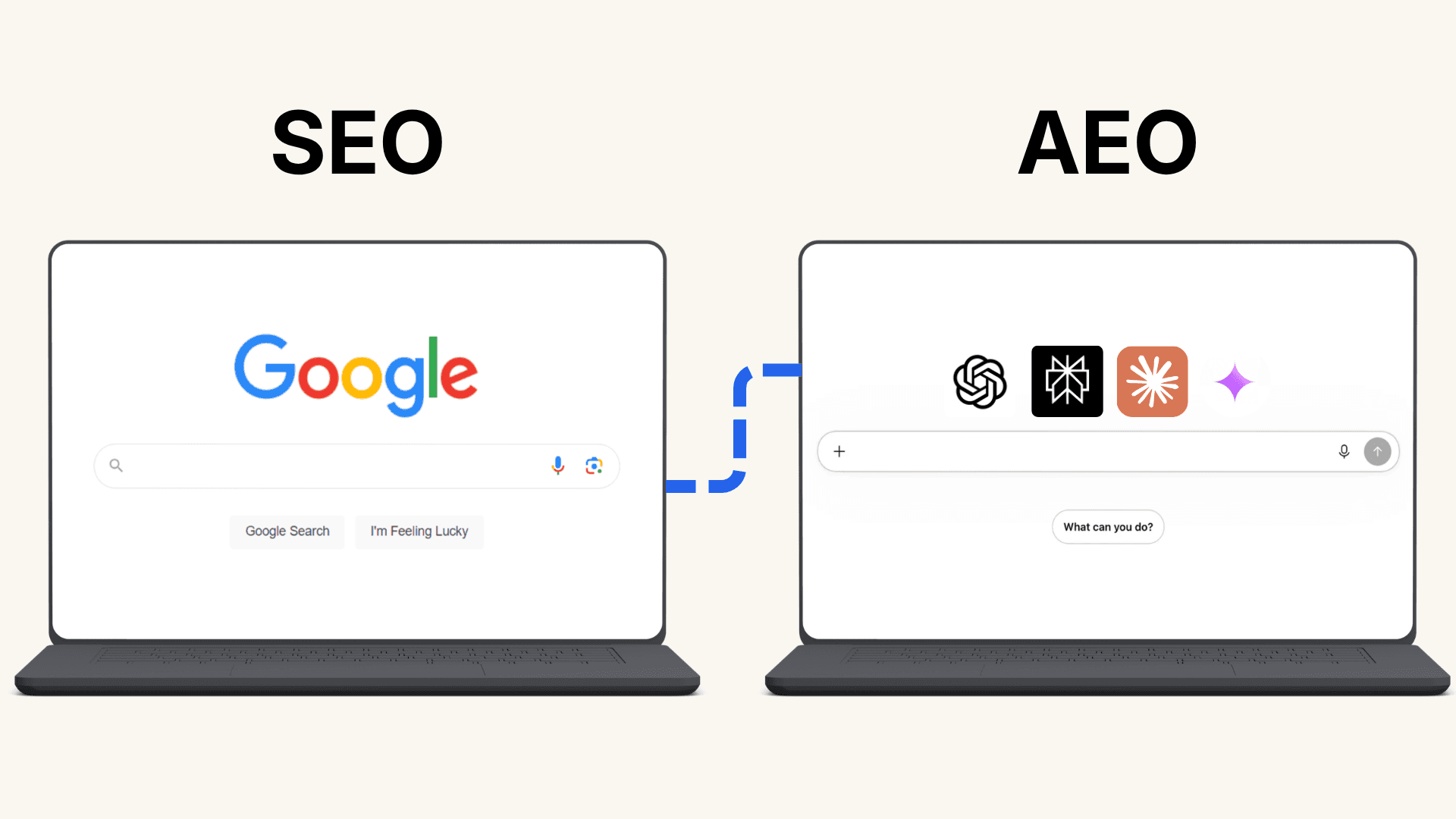
SEO vs AEO: a building block, not a replacement
AEO can feel like a brand-new discipline to learn from scratch, right as clicks from Google search keep dropping. It isn't. AEO is built on the SEO fundamentals already in place, here's how the two actually work together.

AI Visibility
on
How online reviews improve AI visibility: why reviews matter
Online reviews give AI search tools more context about your brand by showing what real customers say about your products or services. Learn how reviews, reputation, and online mentions can support your AI visibility and help AI understand when your brand may be relevant.

AI Visibility
on
AI visibility: AI marketing that reaches decision makers
AI marketing isn't just content and ads anymore, it's how the buying committee actually finds you. Here's who's using ChatGPT, Perplexity, Claude, and Google AI Overview, and why missing even one of them can cost you the sale.

AI Visibility
on
August 2026 ranking dips explained: seasonal trends vs. AI visibility changes
Is your August ranking drop seasonal or AI related? Learn which SEO and AI visibility signals can help you find out.

AI Visibility
on
The AI visibility gap: Why engines recommend different brands
We ran the same prompt across ChatGPT, Claude, Perplexity, and Google AI Overview and got four different answers. Here’s what it means, and why the gap in AI visibility matters more than you'd expect.

AI Visibility
on
90-day AI visibility roadmap for better AI search results
A 90-day plan to help your brand get found, understood, and recommended by AI search tools like ChatGPT, Gemini, and Perplexity. Meta data