How Entity SEO, Knowledge Graph Optimization, and Topical Authority Strengthen Search Visibility
Learn how Entity SEO, Knowledge Graphs, and Topical Authority help businesses improve AI visibility, search rankings, semantic relevance, and long-term organic growth.
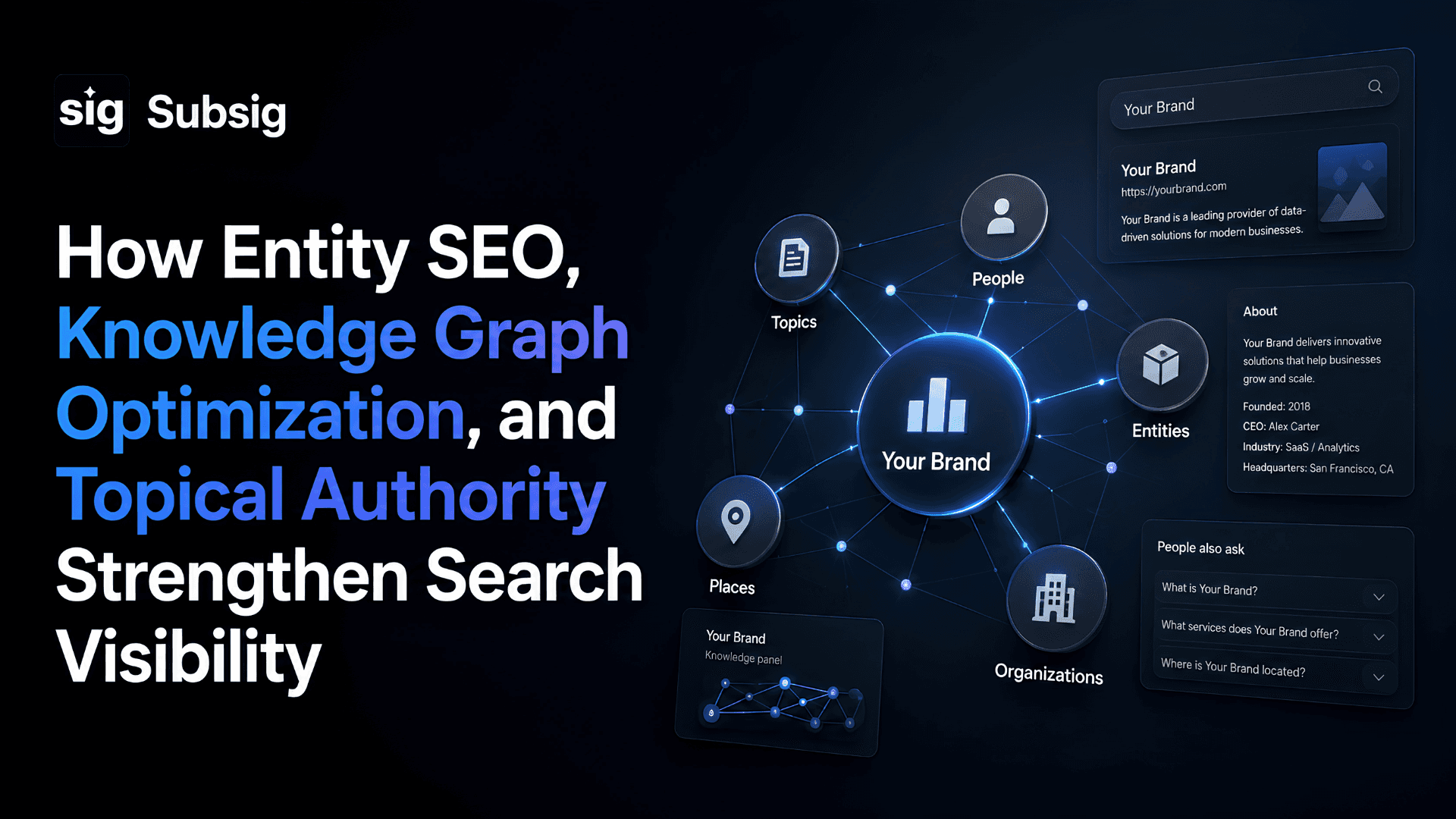
Search engines no longer rank content based solely on keywords. Modern search algorithms use semantic understanding, entity recognition, and contextual relationships to determine which content deserves visibility.
This shift has transformed SEO from a keyword-focused discipline into a broader strategy centered on expertise, authority, and discoverability. Businesses that want to improve rankings, AI visibility, and organic traffic must now help search engines understand who they are, what they specialize in, and how their content connects to larger topics.
That is where Entity SEO, Knowledge Graph Optimization, and Topical Authority come together.
Platforms such as Subsig, Semrush, Ahrefs, InLinks, and Google Search Console help organizations build stronger semantic signals that improve visibility across traditional search engines and AI-powered discovery platforms.
Why search engines prioritize entities and topics
A decade ago, ranking often depended heavily on keyword placement and backlinks. Today, Google and other search engines attempt to understand the meaning behind content rather than simply matching keywords.
Instead of viewing pages as collections of keywords, search engines identify relationships between:
Brands
Products
Organizations
People
Technologies
Industries
Locations
For example, Google understands that Microsoft is a company, Satya Nadella is its CEO, Azure is a cloud platform, and artificial intelligence is one of the company's major business areas. These relationships help search engines deliver more accurate and contextually relevant results.
As AI-powered search continues to grow, semantic understanding becomes even more important. Search engines and AI assistants increasingly want to know what your business represents, not just which keywords appear on a page.
Recommended image embed
Entity relationship graph connecting organizations, products, people, and industry topics.
Understanding Entity SEO
Entity SEO focuses on establishing clear associations between a brand and the topics it wants to be recognized for.
An entity is anything that can be uniquely identified, including businesses, people, products, services, locations, or concepts.
For example, a cybersecurity company may want search engines to consistently associate its brand with:
Network security
Threat detection
Data protection
Security operations
Cyber resilience
The stronger these associations become, the easier it is for search engines to understand the organization's expertise.
How businesses strengthen entity signals
Successful Entity SEO strategies often include:
Structured data markup
Consistent brand references
Author expertise pages
Internal linking
Industry citations
Semantic content clusters
Rather than creating isolated pages, businesses develop interconnected content that reinforces entity relationships throughout the website.
Benefits of Entity SEO
Benefit | Impact |
Improved semantic relevance | Helps search engines understand content context |
Broader ranking opportunities | Supports topic expansion |
Better AI visibility | Improves inclusion in AI-generated responses |
Stronger entity recognition | Reinforces brand expertise |
More accurate search interpretation | Improves topical relevance |
Organizations frequently use tools such as InLinks, Semrush, and Subsig to identify important entity relationships and content opportunities.
Recommended video embed
Google Search Central Structured Data Guide
https://www.youtube.com/@GoogleSearchCentral
Understanding Knowledge Graph Optimization
Knowledge Graph Optimization focuses on improving how search engines store, validate, and display information about brands and organizations.
Google's Knowledge Graph acts as a massive database of entities and their relationships. It helps power search features such as:
Knowledge panels
Brand profiles
Organization cards
Related searches
AI-generated summaries
Entity-based recommendations
When search engines have strong confidence in an entity, that entity becomes more likely to appear across multiple search experiences.
Building a stronger Knowledge Graph presence
Organizations often improve Knowledge Graph visibility through:
Organization schema
Person schema
Structured data implementation
Digital PR campaigns
Trusted industry citations
Consistent business information
Wikidata references
These signals help search engines verify facts and strengthen entity relationships.
Knowledge Graph Optimization benefits
Benefit | Business value |
Improved brand visibility | Greater search presence |
Enhanced SERP features | More opportunities for discovery |
Better AI citations | Increased discoverability |
Stronger entity trust | Supports authority building |
Rich search experiences | Improves user engagement |
Tools such as Schema.org, Google Search Console, and InLinks help organizations improve how they appear within knowledge systems.
Recommended image embed
Knowledge panel example showing brand information, related entities, and organizational details.
Why topical authority matters more than ever
Topical Authority measures how comprehensively a website covers a subject area.
Search engines increasingly reward websites that demonstrate expertise across an entire topic rather than publishing disconnected articles.
For example, a website focused on digital marketing might build authority through content covering:
SEO
Content marketing
Conversion optimization
Analytics
Paid advertising
AI search optimization
The goal is to become a trusted resource for an entire topic ecosystem.
Building topical authority
Topical Authority is typically developed through:
Pillar content
Topic clusters
Internal linking
Consistent publishing
Expert contributors
Original research
Comprehensive resource hubs
Instead of publishing random content, organizations focus on creating interconnected content ecosystems that reinforce expertise.
Signals of strong topical authority
Signal | Why it matters |
Comprehensive topic coverage | Demonstrates expertise |
Strong internal linking | Reinforces semantic relationships |
Consistent publishing | Builds trust |
High-quality backlinks | Strengthens authority |
User engagement | Indicates content value |
Platforms like Ahrefs, Semrush, and Subsig help businesses identify topic gaps and expand authority within strategic subject areas.
Recommended image embed
Topic cluster visualization showing pillar pages linked to supporting content.
How these strategies work together
Entity SEO, Knowledge Graph Optimization, and Topical Authority are often most effective when implemented together.
Each strategy solves a different problem:
Strategy | Primary focus | Goal |
Entity SEO | Entity relationships | Improve semantic understanding |
Knowledge Graph Optimization | Entity verification | Improve search visibility |
Topical Authority | Subject expertise | Improve ranking potential |
A simple way to think about it:
Entity SEO tells search engines who you are.
Knowledge Graph Optimization helps verify that information.
Topical Authority demonstrates what you know.
When these signals align, search engines gain greater confidence in your content and brand.
Real-world examples
SaaS companies
Software providers use Entity SEO to strengthen associations between their products and target industries while building topical authority around solution-focused content. This helps improve visibility for both branded and non-branded searches.
Ecommerce brands
Retailers optimize product entities, category expertise, and brand relationships to improve product visibility, shopping results, and organic traffic.
Publishers
Media organizations build authority by publishing comprehensive topic coverage while strengthening author entities, editorial expertise, and organizational trust signals.
Professional services firms
Consultancies, agencies, and legal firms establish authority by creating deep content ecosystems focused on their areas of expertise, making it easier for search engines to associate their brand with specific services and industries.
Recommended image embed
Search visibility framework connecting entities, authority signals, knowledge graphs, and content clusters.
The future of semantic SEO
Search continues moving toward entity-based understanding rather than keyword matching alone.
Future SEO strategies will increasingly focus on:
AI visibility
Semantic search
Knowledge graph development
Entity authority
Generative Engine Optimization (GEO)
Answer Engine Optimization (AEO)
Organizations that establish strong entity relationships, trusted authority signals, and comprehensive topic coverage will be better positioned for both traditional search and AI-powered discovery.
Platforms like Subsig, Ahrefs, Semrush, and InLinks are helping businesses adapt to this shift by improving semantic relevance and discoverability across emerging AI search experiences.
Recommended video embed
Entity SEO Tutorial by InLinks
https://www.youtube.com/results?search_query=entity+seo+tutorial
Videos and additional resources
Google Search Console: https://search.google.com/search-console/about
Schema.org Structured Data Documentation: https://schema.org/
Semrush Knowledge Graph Guide: https://www.semrush.com/blog/
Ahrefs SEO Learning Center: https://ahrefs.com/blog/
InLinks Entity SEO Resources: https://inlinks.com/blog/
Google Search Central YouTube Channel: https://www.youtube.com/@GoogleSearchCentral
Conclusion
Entity SEO, Knowledge Graphs, and Topical Authority help search engines and AI systems understand, verify, and trust your brand, leading to stronger search rankings, greater AI visibility, and sustainable digital growth.
Related Articles
AI Visibility

on
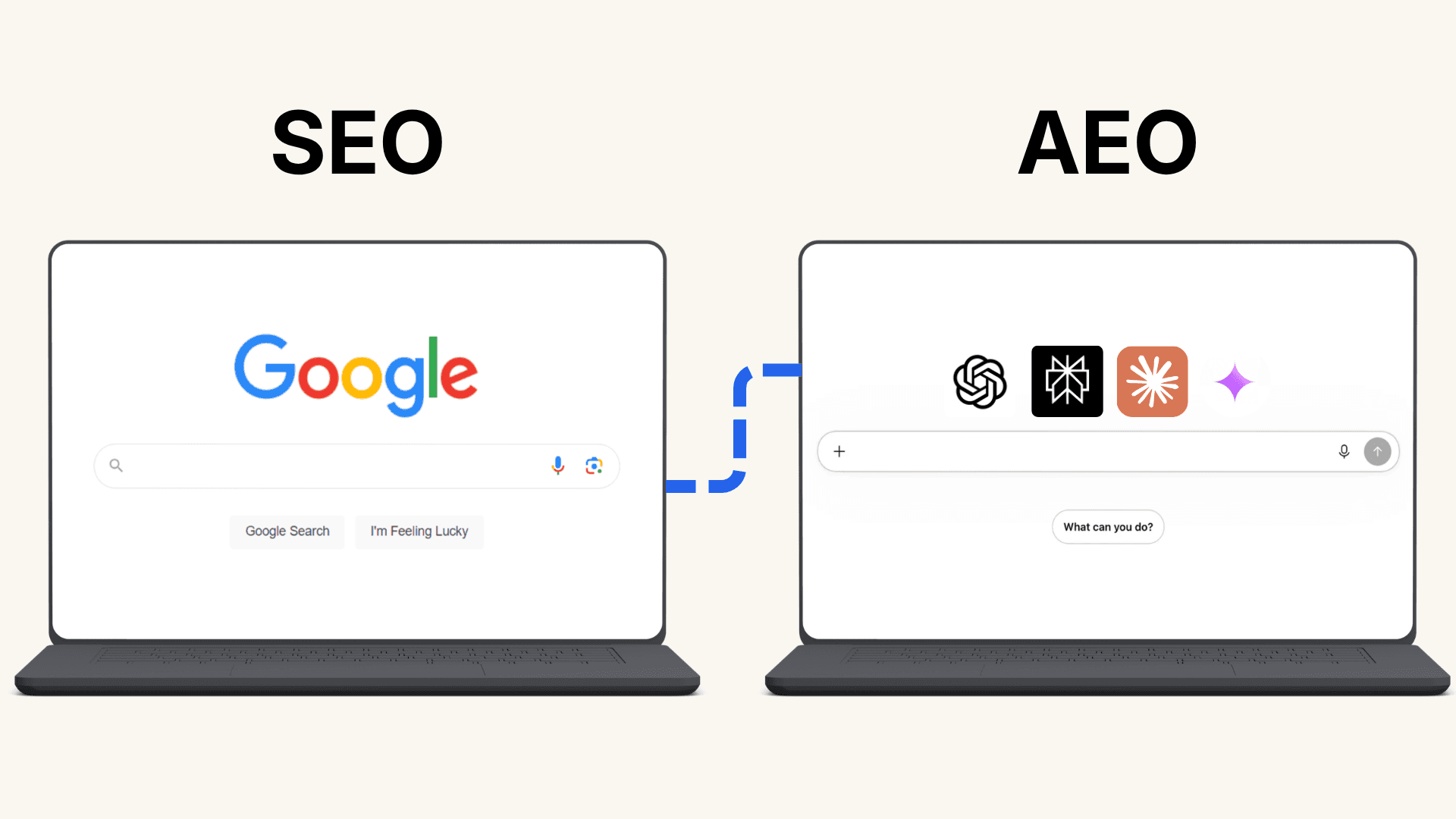
SEO vs AEO: a building block, not a replacement
AEO can feel like a brand-new discipline to learn from scratch, right as clicks from Google search keep dropping. It isn't. AEO is built on the SEO fundamentals already in place, here's how the two actually work together.

AI Visibility
on
How online reviews improve AI visibility: why reviews matter
Online reviews give AI search tools more context about your brand by showing what real customers say about your products or services. Learn how reviews, reputation, and online mentions can support your AI visibility and help AI understand when your brand may be relevant.

AI Visibility
on
AI visibility: AI marketing that reaches decision makers
AI marketing isn't just content and ads anymore, it's how the buying committee actually finds you. Here's who's using ChatGPT, Perplexity, Claude, and Google AI Overview, and why missing even one of them can cost you the sale.

AI Visibility
on
August 2026 ranking dips explained: seasonal trends vs. AI visibility changes
Is your August ranking drop seasonal or AI related? Learn which SEO and AI visibility signals can help you find out.

AI Visibility
on
The AI visibility gap: Why engines recommend different brands
We ran the same prompt across ChatGPT, Claude, Perplexity, and Google AI Overview and got four different answers. Here’s what it means, and why the gap in AI visibility matters more than you'd expect.

AI Visibility
on
90-day AI visibility roadmap for better AI search results
A 90-day plan to help your brand get found, understood, and recommended by AI search tools like ChatGPT, Gemini, and Perplexity. Meta data