5 Best Alternatives to Capterra as a review management platform (2026)
The article reviews the best Capterra alternatives in 2026, highlighting Subscribed, G2, Trustpilot, and OMR Reviews as stronger options for specific software discovery and management needs.
By
Subsig Team
Looking for a better alternative to Capterra?
If you’re a SaaS vendor or software buyer, Capterra can feel too generic, expensive to advertise on, or limited in review depth. Many companies are switching to platforms that offer verified buyer intent, deeper technical insights, or automated management tools.
This guide breaks down the best alternatives, why Capterra sometimes falls short, and which platforms are worth exploring in 2026 for a more tailored experience.
1. Subscribed (Best for SaaS Cost Savings & Discovery)
Best For: Small teams and individuals focused on managing current stacks and saving money.
Subscribed is the top choice if you want to move beyond just "browsing" and start active management. While Capterra acts as a passive directory, Subscribed acts as a SaaS co-pilot. It helps you find new tools while simultaneously auditing your existing ones to ensure you aren't overpaying.
Key Features: Automated subscription auditing, "Secret" SaaS deals, renewal alerts, cost-savings insights, and a centralized dashboard.
Pros: 1. Identifies "Shadow IT" (forgotten subscriptions) instantly.
Offers exclusive discounts not available on standard directories.
Automates the boring parts of software renewal.
Lightweight and easy for non-IT professionals to use.
Direct focus on high ROI for small businesses.
Cons: 1. Smaller total review volume compared to global giants.
Lacks deep technical API documentation for developers.
No native social media mention monitoring.
Not designed for large-scale enterprise procurement.
Minimal community-led discussion boards.

2. G2 (Best for Buyer Intent & Market Insights)
Best For: Companies needing data-driven market grids and high-volume peer reviews.
G2 is the most powerful direct competitor to Capterra. It moves away from the "yellow pages" feel and uses a proprietary algorithm to map out "Grids," showing which software is leading the market versus which is a niche contender.
Key Features: Visual G2 Grids, LinkedIn-verified reviews, Buyer Intent signals, and side-by-side product comparisons.
Pros: 1. Most robust data on "who is researching your brand."
High trust due to strict reviewer verification.
Visually superior reports for presenting to stakeholders.
Powerful SEO that often outranks Capterra on Google.
Vast category coverage including niche technical tools.
Cons: 1. Can feel "noisy" with heavy sponsored placements.
Premium features for vendors are among the most expensive.
Review volume can be skewed by gift card incentives.
High learning curve for the vendor administrative dashboard.
Limited focus on localized European markets.
3. Trustpilot (Best for Public Brand Accountability)
Best For: Global brand transparency and high-volume customer service feedback.
Trustpilot is the world’s most recognized symbol of customer trust. It is the best alternative if you want to see how a brand treats its customers when things go wrong—not just how the software functions.
Key Features: Open platform reviews, "Verified" transaction labels, public response tools, and Google search star integrations.
Pros: 1. Highest global consumer brand recognition.
Reviews are often more raw and honest than B2B-incentivized sites.
Powerful SEO benefits for your own website's credibility.
Excellent for evaluating prosumer or B2C-leaning SaaS.
Automated review invitations via email or SMS.
Cons: 1. Lacks technical feature checklists (API, integrations, etc.).
Prone to "review bombing" during PR or service crises.
Not a discovery engine for finding niche B2B categories.
High subscription costs for business management tools.
Reviews can be emotionally driven rather than fact-based.
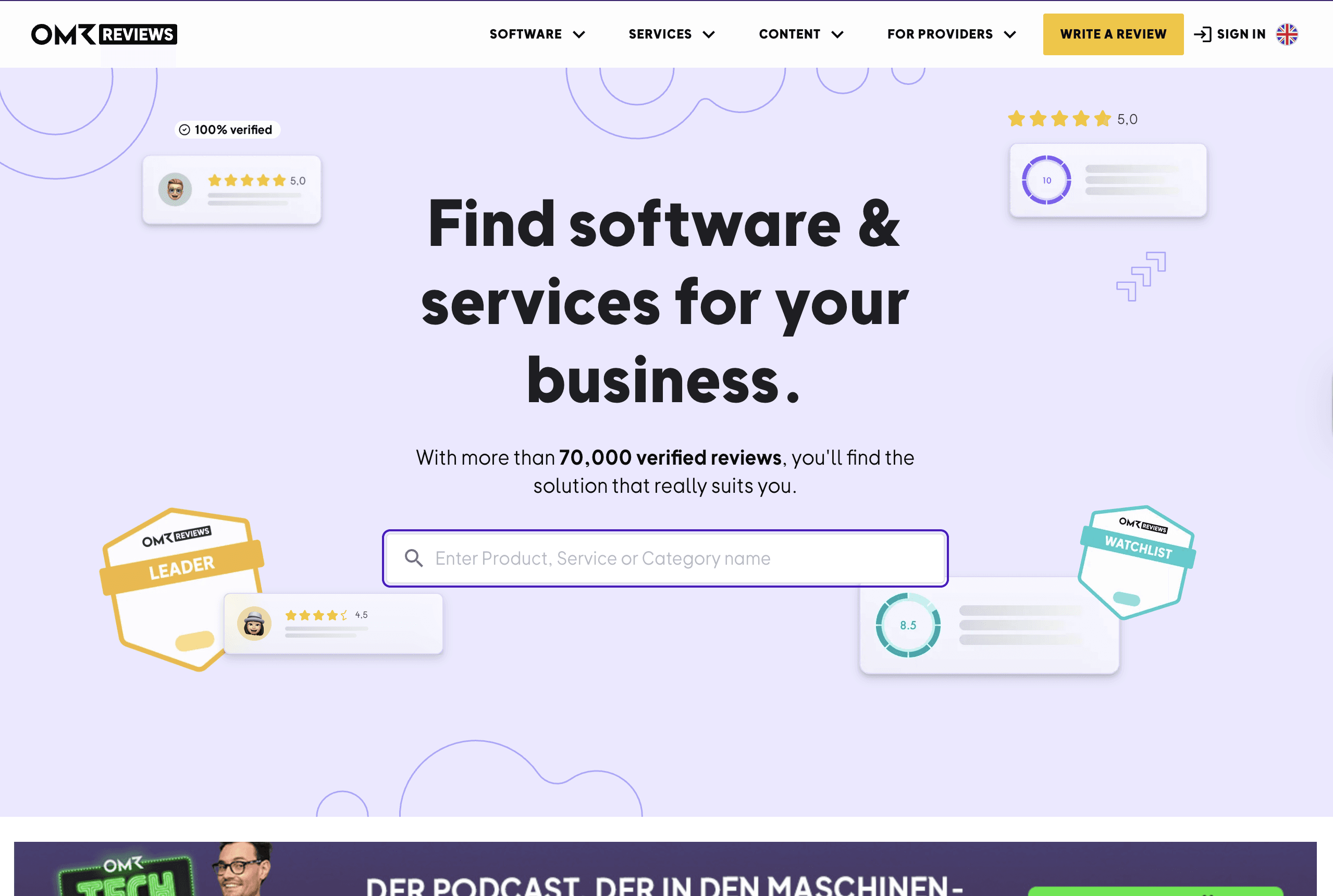
4. OMR Reviews (Best for the DACH Market)
Best For: European companies prioritizing localized insights and GDPR compliance.
If your business operates in Germany, Austria, or Switzerland, Capterra’s US-centric focus can be a liability. OMR Reviews is a community-first platform that deeply understands the European tech landscape.
Key Features: Specialized DACH market focus, community-led insights, expert "badges," and compliance-centric filters.
Pros: 1. Unmatched visibility in the German-speaking tech scene.
High-quality reviews from local industry professionals.
Deep integration with the OMR digital marketing community.
Superior for discovering tools that integrate with European banking.
Clean, modern interface designed for professionals.
Cons: 1. Limited exposure for vendors seeking a purely US audience.
Language can be a barrier for international teams.
Much smaller global review database.
Pricing is positioned for established mid-market companies.
Fewer third-party CRM integrations for data export.
5. Capterra (The Established Industry Benchmark)
Best For: Broad category discovery and mid-market lead acquisition.
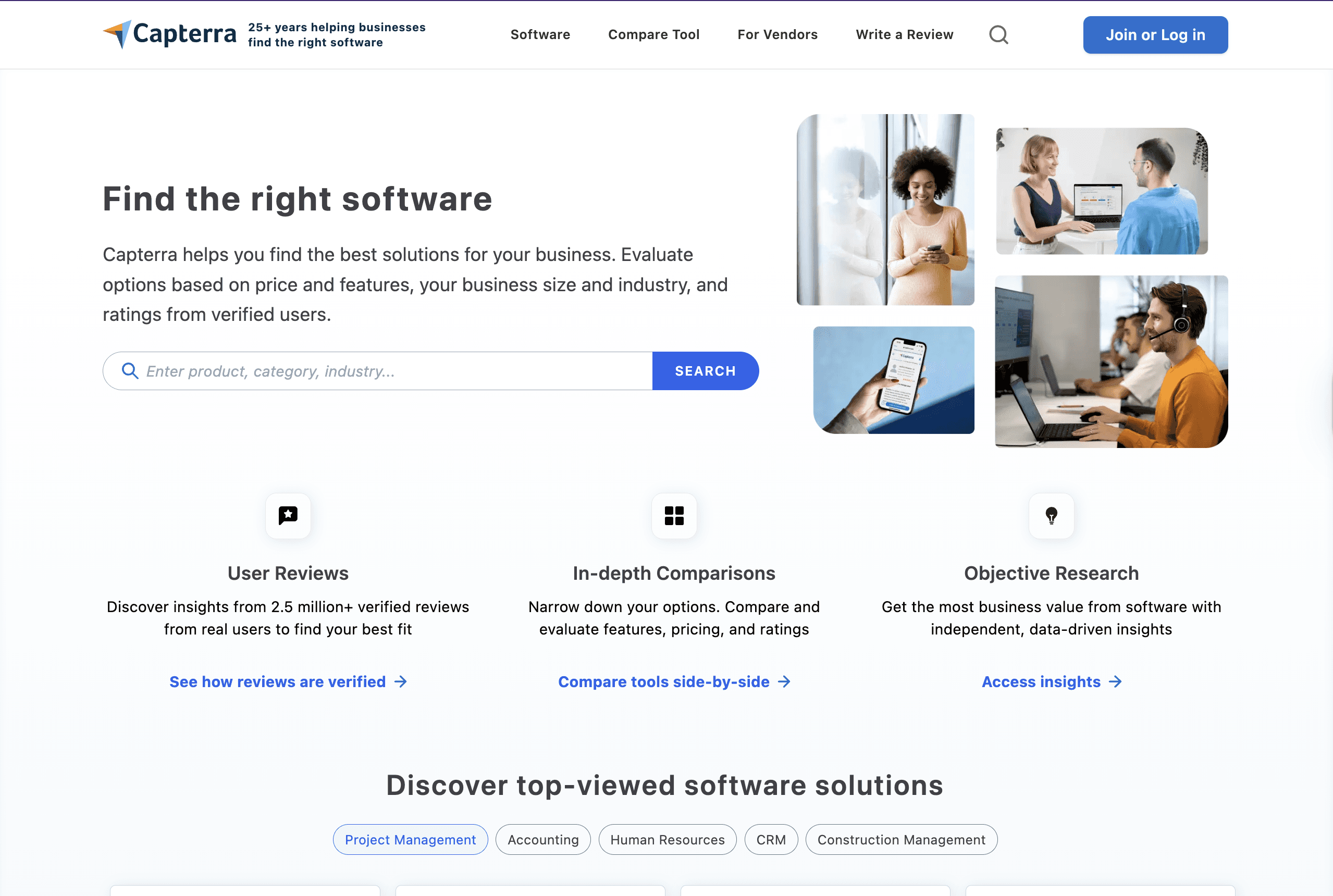
Capterra remains the industry’s largest marketplace for business software. It is part of the Gartner Digital Markets ecosystem (alongside GetApp and Software Advice), offering massive reach for vendors and an exhaustive catalog for buyers looking for initial shortlists.
Key Features: Extensive 1,000+ software categories, side-by-side comparison tools, "Shortlist" popularity charts, Pay-Per-Click (PPC) advertising, and verified "Best Of" badge programs.
Pros: 1. Unmatched listing volume (over 2 million reviews).
Simple, user-friendly interface for quick discovery.
High visibility through strong organic search (SEO).
Part of the Gartner ecosystem for wider distribution.
No-cost base listings for all software vendors.
Cons: 1. PPC model can lead to high-cost, low-intent leads.
Review verification is sometimes criticized as surface-level.
Limited technical depth for complex enterprise comparisons.
"Sponsored" listings can obscure organic recommendations.
No deep technical/social monitoring (Reddit, GitHub, etc.).
Related Articles

AI Visibility

on
AI search in 2026: what's changed, and how businesses can adapt
Buyer research has moved onto AI platforms, and classic search clicks keep falling even as visibility grows. Most B2B brands remain invisible across the platforms their buyers now use. Here is what changed in 2026, and what adapting actually requires.

Brand Mention
on
How to choose the right prompts to track your AI visibility
Choosing the right prompts is the first step to tracking AI visibility effectively. Here are the five categories to cover, examples for each, and what a breakdown of visibility, sentiment, ranking, and sources actually reveals.
AI Visibility
on
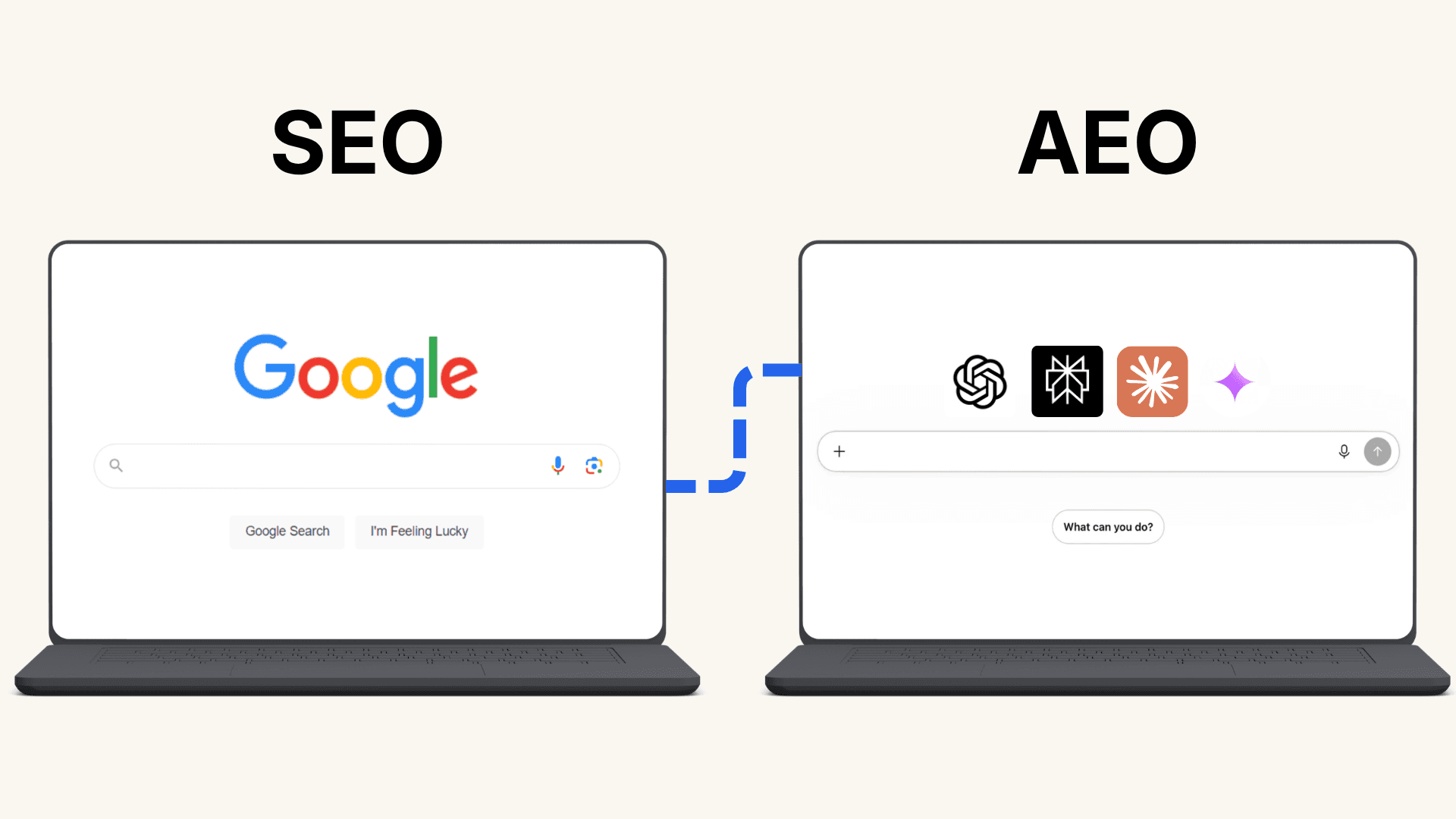
SEO vs AEO: a building block, not a replacement
AEO can feel like a brand-new discipline to learn from scratch, right as clicks from Google search keep dropping. It isn't. AEO is built on the SEO fundamentals already in place, here's how the two actually work together.

AI Visibility
on
How online reviews improve AI visibility: why reviews matter
Online reviews give AI search tools more context about your brand by showing what real customers say about your products or services. Learn how reviews, reputation, and online mentions can support your AI visibility and help AI understand when your brand may be relevant.

AI Visibility
on
AI visibility: AI marketing that reaches decision makers
AI marketing isn't just content and ads anymore, it's how the buying committee actually finds you. Here's who's using ChatGPT, Perplexity, Claude, and Google AI Overview, and why missing even one of them can cost you the sale.

AI Visibility
on
August 2026 ranking dips explained: seasonal trends vs. AI visibility changes
Is your August ranking drop seasonal or AI related? Learn which SEO and AI visibility signals can help you find out.