

Customer reviews can appear as sources when buyers ask ChatGPT, Perplexity or Gemini to compare brands. In its 2026 Trust Report, published on 24 November, Trustpilot said it removed 7.8 million fake reviews in 2025, around 11% of all submissions that year. For brands, the report raises a practical question. When buyers ask AI for recommendations, which reviews do those answers cite, and what do they say about the brand?
What the Trustpilot report found
Trustpilot received 70 million reviews in 2025, up 14% from the previous year. Automation accounted for 91% of fake review removals, with specialist teams handling the rest. Trustpilot also says that when it places a consumer warning on a profile for review misuse, it stops sharing that business’s TrustScore with search and answer engines while the warning is active.
The November report follows Trustpilot’s September product release, which introduced dedicated public pages for individual products and expanded its location review tools. The release also introduced AI Search Market Insights, which lets businesses compare how often AI platforms cite their Trustpilot profile with how often they cite competitors’ profiles.
How customer reviews show up in AI search
Imagine a buyer asks, “Which webinar platform is easiest for a small marketing team to set up?” A star rating gives them a general sense of customer satisfaction. A review that explains how long setup took, which integrations the team configured and how support handled an issue gives them details they can use to compare platforms.
In a Trustpilot-commissioned study of more than 800,000 AI responses, Seer Interactive found that Trustpilot was the most frequently cited review website across ChatGPT, Perplexity, Google AI Mode and Gemini. To see whether that pattern applies to your brand, start with the questions your buyers are likely to ask.
What buyers ask AI | What to check in the answer |
|---|---|
“What are the best webinar platforms for a small team?” | Does your brand make the shortlist? Which competitors appear alongside it? |
“How does Brand A compare with Brand B for onboarding?” | Does the answer describe onboarding accurately? Which sources support the comparison? |
“Which provider offers this service near me?” | Does the answer reference the right branch? Does it draw on location-specific information? |
Watch Trustpilot’s AI visibility playbook
In The AI Visibility Playbook, Trustpilot discusses practical steps brands can take as buyers use AI to discover and compare their options.
How to track the role of reviews with Subsig
Start with a consistent set of questions buyers ask before making a decision. Include questions about your category, comparisons with competitors and specific needs such as onboarding, integrations or local availability. Track the same questions across the AI platforms that matter to your market so you can compare results over time.
Your AI Visibility Score helps you understand how often your brand appears in the answers you track. In Subsig’s reporting, a citation counts when an AI answer links to a source while discussing your brand. Tracking both helps you see where buyers encounter your brand and whether those answers point to Trustpilot, another review site or your own content.
If a competitor keeps appearing in answers about easy onboarding, use Subsig’s Prompts report to read those answers and check which sources they cite. You might find that a detailed customer review explains how long setup took, while a product guide shows what the team needed to configure.
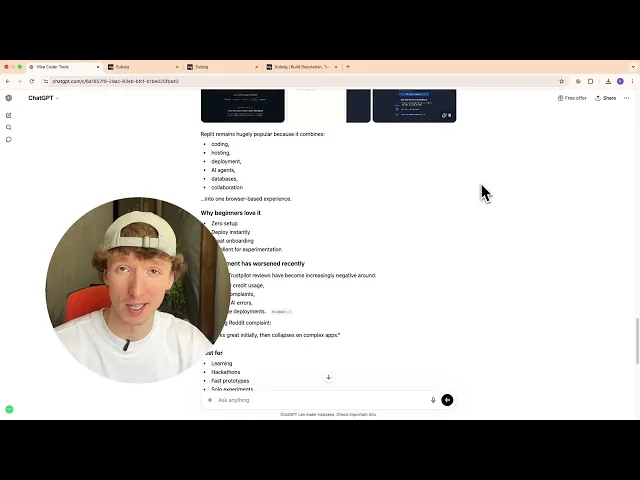
In the next video, we explain how customer reviews, community discussions and third-party coverage can shape the way buyers discover and compare brands through AI.
Make it easy for customers to share honest feedback
Give customers a consistent opportunity to review their experience after a purchase or service interaction. Under Trustpilot’s guidelines for businesses, invitations should use neutral wording and go to customers fairly. Trustpilot prohibits incentives and selectively inviting people who are likely to leave positive feedback.
Use recurring themes in reviews to improve the information buyers can find. If customers often say setup was easier than expected, check whether your onboarding guide shows what the process actually involves. If they keep asking about an integration, make its requirements and setup steps easy to find on your product site.
What does AI tell buyers about your brand?
Explore Subsig’s methodology to see how we track buyer questions, benchmark competitors and identify the review sites and other sources cited in AI answers.
Related Articles
Review Monitoring

on
What Trustpilot’s 2026 Trust Report means for AI visibility
Trustpilot’s 2026 Trust Report revealed that the platform removed 7.8 million fake reviews in 2025. We look at how customer reviews show up in AI recommendations and how Subsig helps brands see which sources AI cites when buyers compare their options.

AI Visibility
on
Google Business Home and the AI visibility gap
Google’s Gemini-powered dashboard brings Business Profile management, reviews, content, and performance into one place. Here’s what the beta covers and how Subsig helps teams understand where they appear in AI answers.

AI Visibility
on
ChatGPT gives businesses a new way to understand their AI visibility
OpenAI’s Businesses in ChatGPT update gives eligible brands access to business profiles and engagement insights. Learn what the data means and how Subsig can help you identify your next steps.

Review Monitoring
on
G2 unites four software marketplaces in its biggest seller experience update
G2 has unified review collection across G2, Capterra, Software Advice, and GetApp. Here’s what changes for software brands and how Subsig can help.

Reddit Marketing
on
2026 Reddit updates: what they mean for your brand’s AI visibility
Explore Reddit’s 2026 search and feed updates, their implications for brand AI visibility, and how Subsig connects community engagement with measurement.

AI Visibility
on
Stop chasing clicks and start winning AI visibility
Discover why AI visibility is becoming the new measure of brand discoverability and how to make your brand stand out in AI powered search.